Make low porosity hair easier to care for, step by step
If water and products seem to sit on your hair, you may be dealing with low porosity. Here’s how to recognise it and build a routine that your hair can actually drink.
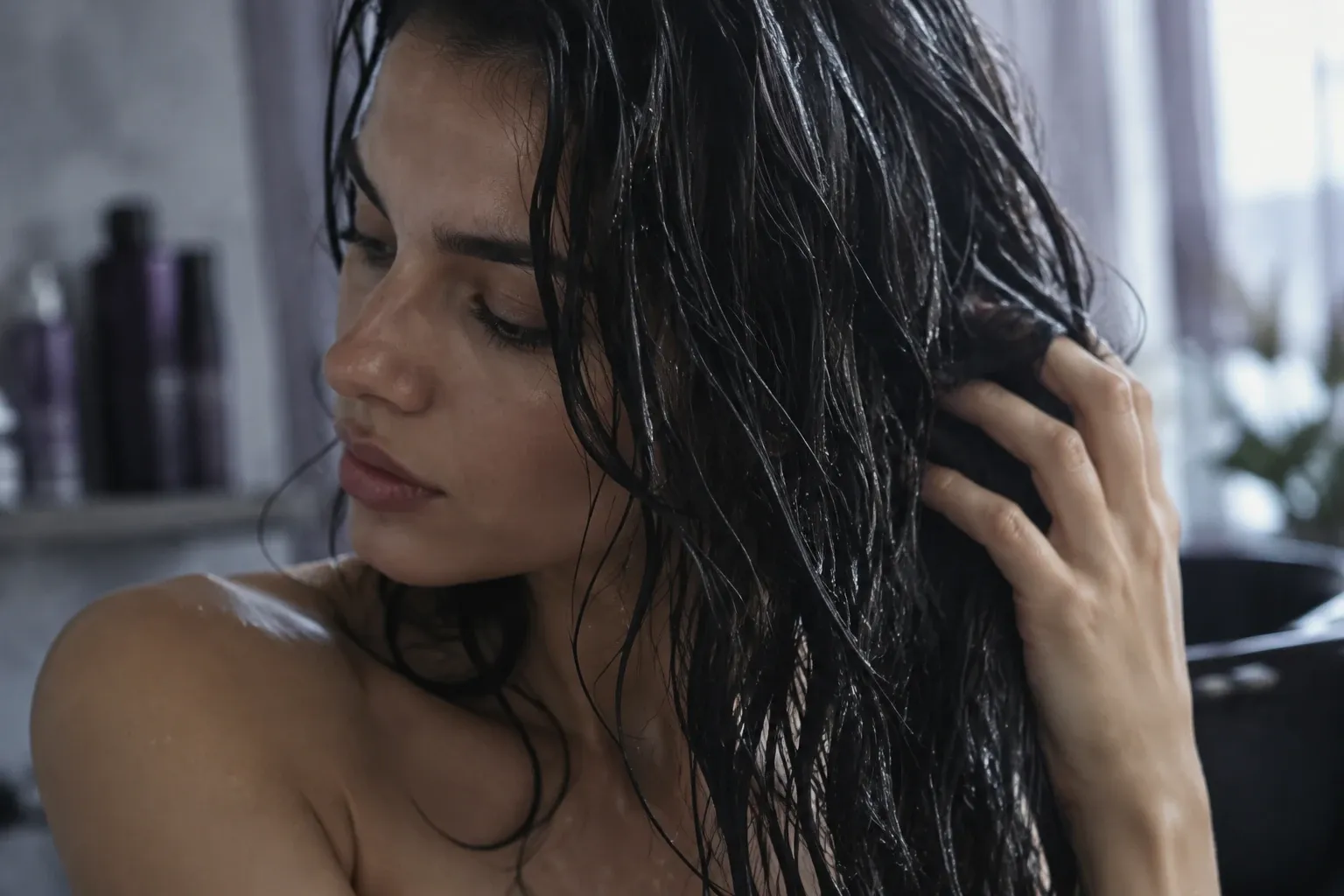
You’ve tried leave‑ins and oils but they just slide around, wash day takes ages, and drying seems endless. That pattern often points to low porosity hair. Porosity is about how easily water and products pass through the cuticle into the fibre; low porosity resists penetration, so application and technique matter as much as the formula. Below you’ll find clear signs to look for, the ingredients that help, and a simple way to layer them so your hair feels softer without buildup.
What is low porosity hair and how can you tell?
Low porosity describes hair whose cuticle (the outer shield of overlapping cells) lies tightly, so water and products enter more slowly and drying takes longer. These behaviours are reported by medical sources such as Medical News Today, which notes slower water uptake and slower drying, and that baseline porosity is often inherited while damage can increase porosity. A common social‑media “float test” isn’t reliable: Healthline explicitly says it isn’t scientifically validated. Instead, look for real‑life signs: beading water, products sitting on the surface, and long wash and dry times.
If you’re just starting to build a routine, you’ll find an overview of how to match steps to your hair on our page about building a hair care routine.
What changes in your routine when porosity is low?
Because a tight cuticle resists penetration, warmth and water‑loving ingredients help most. Medical sources recommend indirect heat (a steamer, hooded dryer or thermal cap) during conditioning so formulas can work better, and humectants such as glycerin and aloe because they draw in moisture. Both points are made in WebMD’s overview and reiterated by Healthline.
What to de‑emphasise: heavy butters and thick oils early in the routine. On tight cuticles they often sit on top, adding weight without hydration. If you love a sealant, save a tiny amount for the very end to reduce moisture loss after you’ve hydrated.
Which ingredients and textures actually help — and why?
- Humectants first: look for glycerin, aloe, honey or panthenol near the top of the ingredient list. These attract and hold water at the surface and shallow layers, which suits resistant cuticles. This is one of the core tips in WebMD’s advice.
- Lightweight conditioners: thinner, water‑rich conditioners spread easily and are less likely to sit in patches. Healthline suggests even diluting conditioner slightly to improve uptake.
- Clarifiers when needed: an occasional clarifying shampoo removes residue that can block hydration. Dermatology reviews describe clarifiers as the deep‑clean end of the shampoo spectrum for film removal, which is useful when products accumulate on low‑porosity fibres (Indian Journal of Dermatology overview of hair cleansing).
If frizz is your main complaint, pair humectants with light hold to reduce halo‑frizz in damp weather; you can skim our take on taming frizz for humidity‑savvy tweaks.
A simple layering method that helps absorption
Try this on your next wash day; it’s designed to make every step easier to absorb.
- Cleanse for a fresh start
- Use your regular gentle shampoo most washes. When hair feels coated or heavy, swap in a clarifying shampoo to lift residue before conditioning. Low porosity hair often benefits from this reset as Healthline notes.
- Condition with heat
- Apply a lightweight, humectant‑rich conditioner in sections on very wet hair, then add gentle heat for 10–20 minutes with a steamer, hooded dryer or heat cap. This indirect heat tip comes from WebMD and helps formulas work on resistant cuticles.
- Style light to slightly richer
- On damp, warm hair, layer a water‑based leave‑in, then a light cream or foam for definition. If you need extra frizz control, finish with a few drops of a light oil on the very ends only. This “light‑to‑richer” order mirrors the absorption pattern described by Healthline.
- Dry with patience, not friction
- Microfibre towels and low‑heat diffusing reduce cuticle disturbance while you wait for moisture to move through those tight cuticles. If curls are your focus, you’ll find ideas for product textures on our look at curly‑friendly picks in the UK.
How to check it’s working — and when to adjust
Use two quick checkpoints for four consecutive wash days:
- Touch test: hair should feel softer after conditioning with heat than without. If not, increase warmth time or choose a conditioner with more humectant content, as recommended by WebMD.
- Dry‑down time: note how long air‑drying to 100% takes. With the routine above, it often becomes more predictable even if not dramatically faster; Medical News Today explains low porosity hair is inherently slower to absorb and to dry.
If hair gets dull or tacky, add a clarifying wash, which dermatology literature places at the “deep‑clean” end of shampoos. If sections suddenly wet fast and dry very quickly after a chemical service, you may be dealing with new, higher‑porosity areas — something Medical News Today also notes when discussing how damage raises porosity.
When to seek professional help
If you have persistent scalp itch, flakes, breakage or sudden shedding, swap experimentation for medical advice. Healthline links to the idea that hair‑care can be challenging when hair doesn’t cooperate, and dermatology bodies advise seeing a clinician when symptoms persist; they can rule out scalp conditions before you keep changing products.
Frequently asked questions
How do I know it’s low porosity and not just thick or dense hair?
Look at behaviours, not hair width or curl pattern. With low porosity, hair is slow to get fully wet and slow to dry, and products tend to sit on top. These traits are described by medical sources such as Medical News Today, which notes low porosity absorbs water more slowly and dries more slowly. A DIY “float test” in a glass is popular online but isn’t scientifically validated, as Healthline cautions.
Should I avoid protein if my hair is low porosity?
You don’t have to avoid all protein forever, but many low‑porosity routines do better with little or infrequent protein because heavy protein films can compete with moisture. Healthline advises steering clear of strong protein conditioners for low porosity hair and focusing first on hydration with heat and humectants, then testing small amounts of lightweight, hydrolysed proteins only if needed.
Do I need a clarifying shampoo and how often?
Low porosity hair is prone to residue sitting on the surface. Using a clarifying shampoo occasionally helps reset slip and shine by removing product film; Healthline suggests a weekly clarifier for some people, but your frequency depends on styling habits and water hardness. If you rarely use heavy stylers, spacing clarifying washes further apart can be fine.
Can low porosity change over time?
Yes. Porosity can increase with chemical or mechanical damage, while your baseline porosity is largely inherited. Medical News Today notes that porosity is influenced by genetics, and that damage from processes like bleaching tends to raise porosity rather than lower it. If hair suddenly soaks up water and dries very fast after chemical services, that points to higher porosity areas.
Is low porosity linked to frizz or to curly hair only?
No. Porosity is separate from curl pattern. Any pattern can be low, medium or high porosity. Frizz has several causes including humidity mismatch, cuticle lift and residue; if frizz is your main issue, start with humidity‑aware styling and surface smoothing rather than assuming porosity is the only lever.
Related reading