Tame frizzy hair with choices that work in real weather
Frizz shows up when hair swells, lifts and won’t sit smooth. Here’s what actually changes in your hair, how to choose the right products, and what to do on damp days so it stays defined.
You’ve tried smoothing serums, scrunched gel and the odd hat, yet the halo keeps coming back—especially on wet commutes and in heated rooms. Frizz isn’t a character flaw in your hair; it’s a mix of water, chemistry and handling. Below, you’ll see why hair puffs up in humidity, which products really make a difference, how to put them together in a routine, and how to tweak your approach when the weather changes. If you’re building a full care routine, start with the basics in our guide to hair advice.
Why hair goes frizzy in real life
Hair takes up water from the air. As it hydrates, the outer cuticle plates lift and the fibre swells, which makes strands catch light differently and look fuzzy. Microscopy work on human hair shows cuticle cells can spread by 50–150% when hydrated, much more than the shaft diameter changes, which helps explain the raised, frizzy surface in damp conditions (atomic force microscopy of hair cuticles).
Humidity also shifts the temporary hydrogen bonds that hold your hair’s day‑to‑day shape. When moisture rises, those bonds break and reform in a new pattern, nudging waves and curls—and any lifted cuticles—into frizz if the surface isn’t smoothed and aligned (review of chemical bonds and hair behaviour).
What actually helps: the criteria to choose products
- Reduce water “spikes” and lift: film‑forming or conditioning agents that align the surface, reduce static and resist moisture swings help most on frizz‑prone hair. Dermatology resources note that shampoos often include cationic conditioners that adhere to the negatively charged hair shaft to reduce static and frizz (DermNet on shampoos).
- Add a leave‑in where you need it: a leave‑in conditioner used on dry, frizzy areas can make hair feel smoother and decrease frizz without heavy build‑up when applied correctly (American Academy of Dermatology tips).
- Think “humidity management”: some styling products are designed to improve hair’s humidity resistance—lab methods even score this by how hair elasticity changes at 50% versus 80% relative humidity after treatment (evaluation of humidity resistance via elasticity).
- Keep heat gentle and purposeful: higher heat smooths by shifting hydrogen bonds, but styles relapse with moisture; use the lowest setting that works and protect hair to avoid roughening the cuticle that worsens frizz (hair bonds and humidity effects).
Which option suits your frizz? A simple comparison
- Leave‑in conditioner: best for everyday softness and detangling; target mid‑lengths/ends to reduce halo frizz without flattening roots.
- Anti‑humidity gel or cream: look for “humidity resistance” or “anti‑frizz” claims; these typically form a light film that slows water uptake and hold the cuticle flat; lab testing links such claims to improved elasticity ratios at high RH.
- Silicone serum or light oil: a drop smoothed over dry hair can fill surface irregularities and reduce static; choose lighter weights for fine hair. Conditioning agents in rinse‑offs can achieve similar slip if you avoid heavy layers.
- Gentle shampoo + regular conditioner: cleansing away build‑up helps products spread evenly; everyday shampoos often contain anti‑static conditioners that reduce frizz on contact.
If you wear curls or coils and want product ideas by texture, see our picks in curly hair products in the UK.
How to put this into practice on damp UK days
-
Cleanse when hair feels coated, not by the calendar. Use a gentle shampoo; distribute through the scalp first, then let suds pass through lengths so you don’t rough the cuticle more than needed.
-
Condition with intention. Comb a rinse‑out conditioner through in the shower to align the cuticle; press, don’t rub, when rinsing so you keep a smooth surface.
-
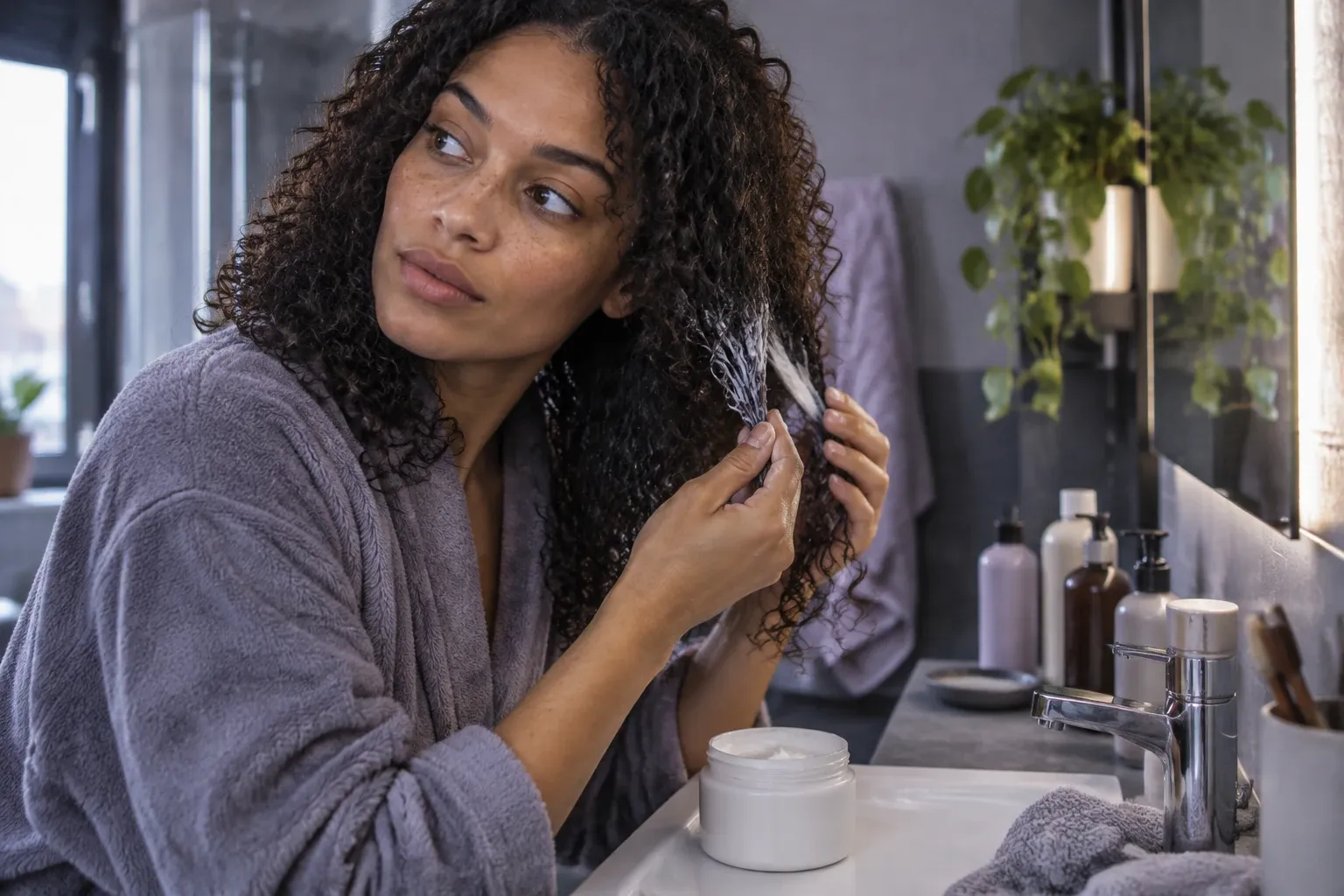
Apply leave‑in on wet hair. Start with a 10p coin amount for fine hair or a 20p for thick hair, focusing on the mid‑lengths and ends. This targeted use is what dermatology advice recommends to reduce frizz and improve manageability.
-
Layer a humidity‑resistant styler. Work a gel or cream through in sections and set your parting while hair is wet. Products that improve elasticity at high RH correlate with better anti‑frizz performance in lab tests.
-
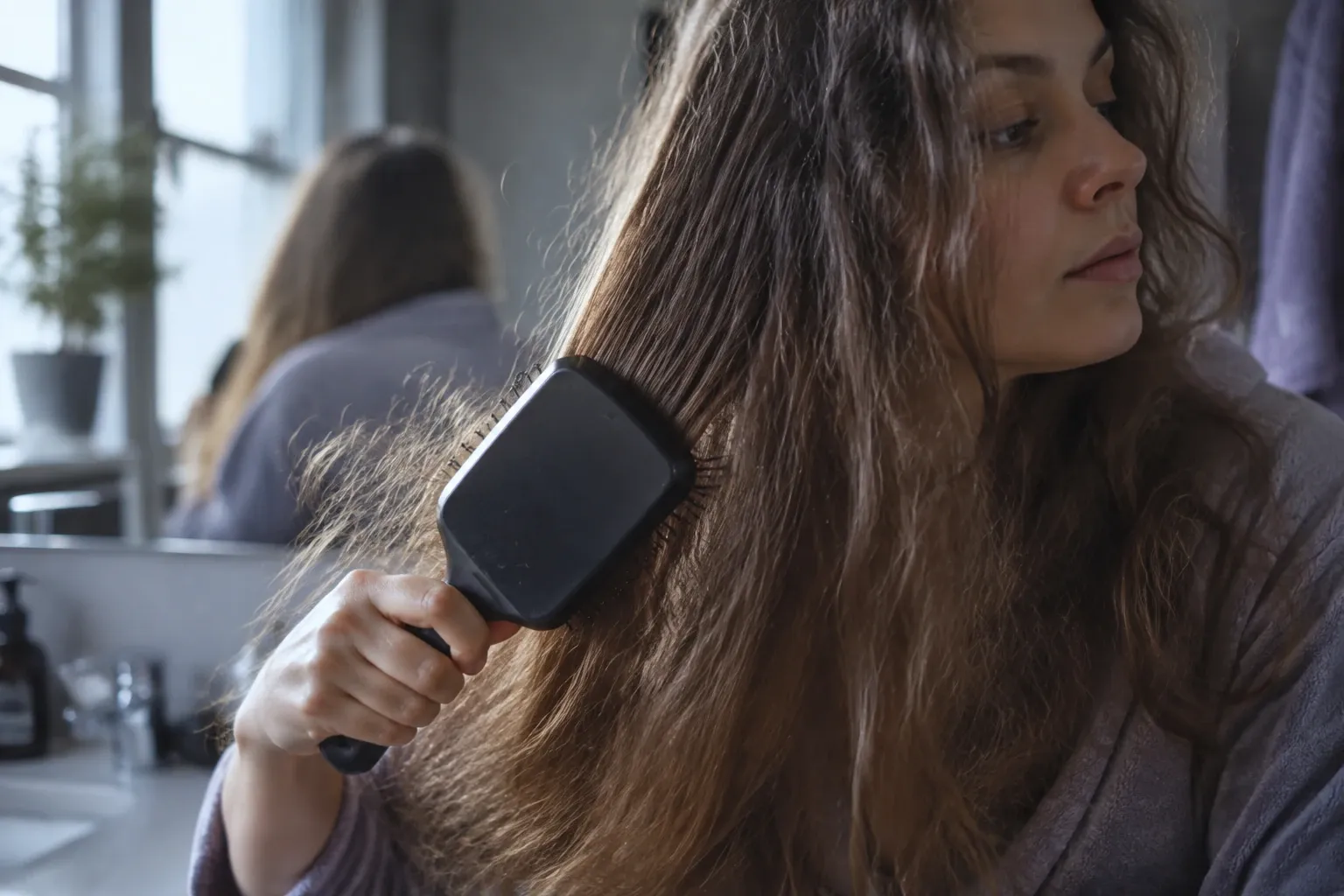
Dry with minimal disturbance. Use a diffuser or cool setting to set the shape, or smooth with a brush and low heat if you prefer straight styling. Remember that humidity will relax heat‑set hydrogen bonds, so finishing serums and light touch‑ups help maintain the finish.
How to tell if your choices are working
- Look for a smoother surface and less halo in similar weather. If frizz returns fast outdoors, increase your film‑forming layer or finish with a light serum to seal alignment.
- Feel the fibre. Hair that swells but feels rough likely has lifted cuticles—prioritise conditioning agents that reduce static and friction, which dermatology sources flag as a core anti‑frizz effect.
- Track weather days. If a style collapses in mist or drizzle, plan more hold and a finishing layer on wash day. On drier days, lighten the routine to avoid build‑up.
If you’re resetting your whole routine, build it step by step with our overview of hair advice.
Frequently asked questions
What causes frizz on humid days?
When hair absorbs moisture, the cuticle plates lift and the fibre swells, so strands catch on each other and look fuzzy. Microscopy studies show cuticle cells can spread dramatically when hydrated, which explains the extra volume and frizz in damp air.
Is leave‑in conditioner worth it for frizz?
Yes. Dermatology guidance says a leave‑in applied where hair is dry or frizzy helps reduce frizz and makes hair more manageable. Focus it on the mid‑lengths and ends and adjust the amount to your density and texture.
Do I need a silicone serum to fight frizz?
Silicones aren’t mandatory, but lightweight ones can smooth the surface and slow water uptake. Cationic conditioning agents in many shampoos and conditioners also reduce static and frizz; you can choose silicone‑free formulas with those agents if you prefer.
Why does my hair frizz after straightening?
Heat styling rearranges weaker hydrogen bonds for a smooth look, but those bonds reset with moisture. In humid air the style relaxes and frizz returns. Using lower heat, a heat protectant and finishing products that resist humidity can help.
How do I know if I’m using too much product?
If hair feels coated, dull or loses movement, you likely over‑applied. Reduce the amount, apply in thinner layers on wet hair, and cleanse with a gentle shampoo when needed to remove build‑up so conditioners can work evenly.
Related reading