Cowlick hair and how to manage it with your haircut and styling
A cowlick can make a fringe split, a crown stick up or a short cut sit differently from day to day. You can’t permanently change its natural growth pattern, but you can choose a cut and styling method that work with it.
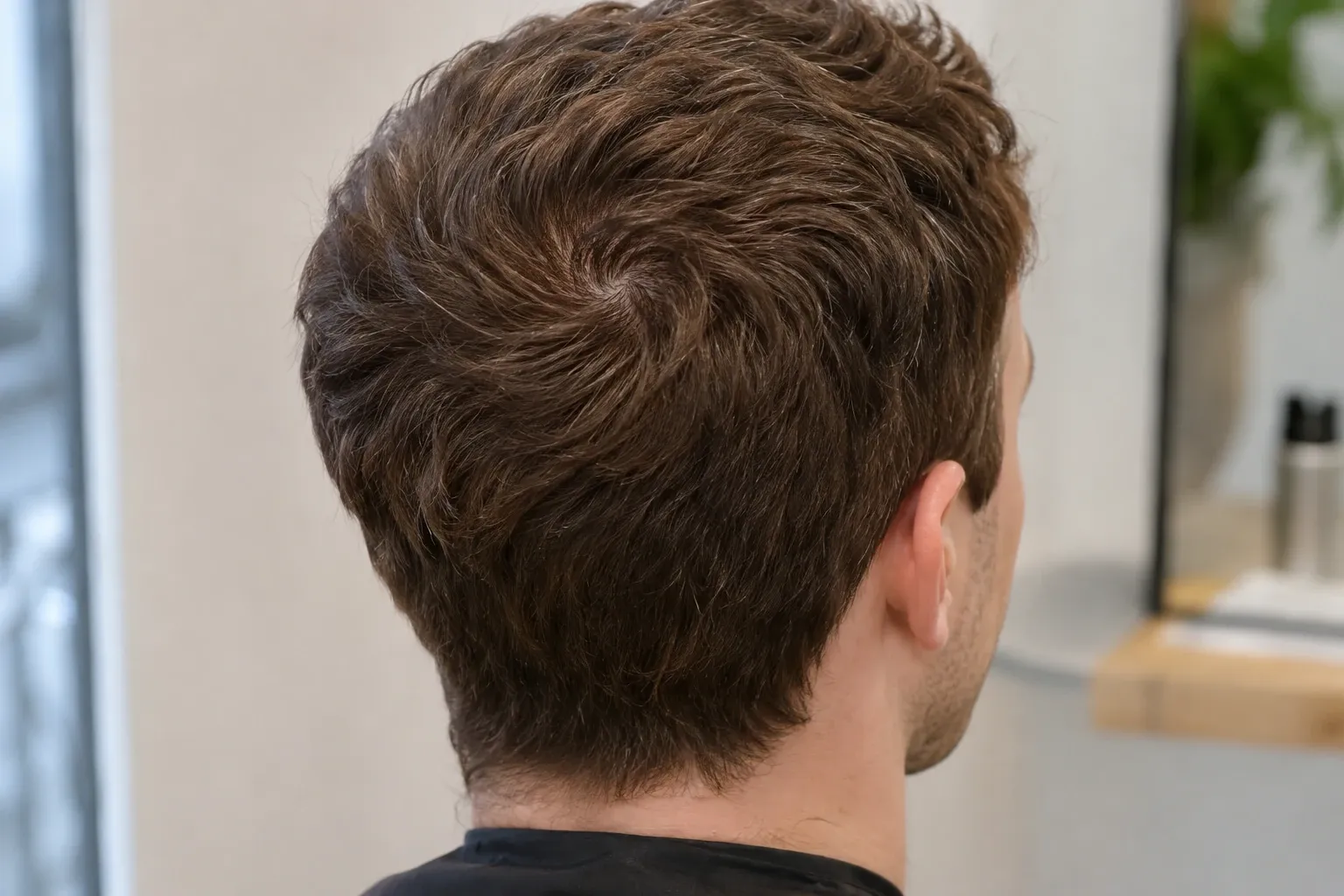
If one section of your hair keeps lifting or parting in a direction you didn’t choose, it can seem as though no haircut quite behaves as expected. The key is to look at where the hair grows from, which way it points and how its length affects the shape, rather than trying to force every strand flat.
What makes a cowlick look different from the rest of your hair?
A cowlick is a patch of hair that grows upward or sideways instead of following the direction around it. At the front, it may lift a fringe or create a split near the hairline; at the crown, it can make a circular parting or a raised point; at the nape, it may turn the ends outwards. Hairdressers often use “growth pattern” to describe the direction hair naturally emerges from the scalp.
The location matters because the same approach won’t suit every cowlick. A crown whorl, for example, radiates around a point, while a front hairline cowlick may push a smaller section up or to one side. The clinical terminology in the American Journal of Medical Genetics morphology reference describes a frontal upsweep as upward or sideways growth at the front. It also notes that most people have one clockwise whorl near the crown, around 5% have two whorls, and about 10% have a counter-clockwise whorl. These population observations describe patterns, not a way to predict how any individual haircut will sit.
A cowlick is part of how the hair grows, not a styling mistake. Hair.com notes that all hair types can have cowlicks, from straight to coily hair. Texture, density and length affect how visible a patch appears, so pay attention to the section itself rather than assuming that a particular hair type must be responsible.
Which haircut options work for different cowlicks?
There is no single best haircut for a cowlick. Your choice depends on its position, how strongly the hair lifts, and the look you want to maintain. Hair.com’s stylist advice makes the same point: location matters, and short hair can either be cut very short or left longer for control. Extra length may add weight, while a shorter cut may make the direction easier to incorporate into the overall shape.
If a front cowlick breaks up a fringe, consider a side-swept or textured fringe that follows the direction the hair wants to take. A blunt fringe may be possible, but ask how it will behave once it dries and what daily restyling it may need. If the pattern is at the crown, a textured top or a parting that follows its natural turn may blend more readily than a style that depends on a perfectly flat surface.
At the nape, a hairdresser may be able to shape the outline around the way the hair grows. Cutting right into the lifted area is not automatically the answer: reducing its length can make the change in direction stand out. Conversely, leaving a little extra length may weigh it down. The right choice is individual, so ask to see the section from the side and back before agreeing to a major change.
For shorter, forward-styled cuts, a fringe or textured crop can sometimes accommodate a front growth pattern rather than hide it. If you’re weighing up a look in that family, consider whether a French crop’s shape suits your hairline and daily styling habits; the cowlick itself still needs to be discussed separately with your hairdresser.
How can you style a cowlick at home?
Start with the hair damp, not dripping wet, and work on the roots where the direction begins. Use a comb or brush to guide the section across the growth pattern, then blow-dry while keeping the roots under gentle tension. Hair.com’s stylist-led advice recommends using a fine-tooth comb while blow-drying to guide the cowlick. Aim airflow along the hair rather than blasting the ends; finish once the roots are dry and the section sits the way you want.
You can test two approaches: guide the roots in the direction you want the finished style to lie, or work from side to side before setting them in your chosen direction. American Salon describes a stylist’s approach of combing a cowlick from side to side, with more attention to the direction opposite its growth, to redirect the roots. That same professional tip discusses a 14-tooth point-cutting shear for a particular texturising technique. This is a specific tool and method used by a stylist, not a reason to cut into your own hair with specialist shears.
Use a small amount of styling product only if you need extra control. A light mousse or a flexible styling product may help shape the section, but piling on product can leave hair stiff or weighed down. Try the smallest amount that gives you the finish you prefer, and check the result once your hair has fully dried. If you use heat, keep the dryer moving and avoid holding it very close to the scalp.
Your wider routine can affect how manageable your hair feels, even though it won’t change the direction of a cowlick. For practical basics on matching washing and styling habits to your hair, explore a routine for your hair type.
What should you tell your hairdresser?
Before your appointment, note where the cowlick sits and what it does when your hair is freshly washed and air-dried. If it changes noticeably between wet and dry, explain that too. Bring a photo of the shape you like, but point out which part of the image matters: the fringe, the crown, the length or the overall outline. A reference photo is a starting point, not proof that the same cut will behave identically on different growth patterns.
Ask the hairdresser to show you how the proposed cut will sit at the cowlick, and whether the plan is to work with its direction, reduce its visibility with length or incorporate its lift into the shape. You can also ask what will happen as the cut grows out and whether the style depends on daily blow-drying. If the answer involves removing a lot of length, make sure you understand how the area may look once dry before deciding.
How can you tell whether your approach is working?
Judge the cut and styling in ordinary conditions, not only immediately after a salon finish. Wash your hair as usual, style it with the products and time you would realistically use, and check the cowlick once it is dry. Notice whether the section falls into place, whether it separates in a way you like and whether the shape still works from more than one angle.
If it keeps springing up, that does not mean you have failed to style it. The cut may need a different length or direction, or the easiest solution may be to let the cowlick form part of the style. Tell your hairdresser what happened after the appointment and what level of daily effort you are comfortable with. The aim is a shape you can reproduce, not a promise to erase a natural growth pattern.
Frequently asked questions
Can a cowlick be permanently removed?
A haircut or styling routine can make a cowlick less noticeable, but neither permanently changes the direction in which hair grows. A hair whorl is a pattern of growth from the scalp. If you want a lasting change to its appearance, discuss realistic options with a suitably qualified professional rather than relying on products or home techniques that promise to remove it.
Should you cut a cowlick very short or leave it longer?
Either length can work, depending on the location, the direction of growth and the rest of your haircut. Very short hair may reduce the amount that can lift, but some patterns become more conspicuous when cut short. Extra length can add weight and help hair lie down. Ask your hairdresser to assess your hair in its natural state before choosing.
Can you hide a cowlick with a fringe?
Sometimes. A fringe can sit well if its direction and parting suit the hairline’s growth pattern, but a cowlick at the front may split or lift as the fringe grows. Test the shape while your hair is dry and ask how much daily styling it will take. A side-swept fringe or a more textured shape may be easier to work with.
Is a cowlick the same as hair loss?
A cowlick describes the direction in which hair grows; it can create a visible parting or gap that looks like exposed scalp. That appearance alone does not establish hair loss. If you notice a new change in density, a widening area or other concerns, seek advice from a healthcare professional rather than assuming the cause is a cowlick.
Related reading