How to choose hair oil and apply it to your lengths
If your ends feel rough or your hair looks dull, an oil or serum may help with the finish, but the right choice depends on what you want it to do. Compare the formula, apply sparingly to the lengths and judge the result after styling.
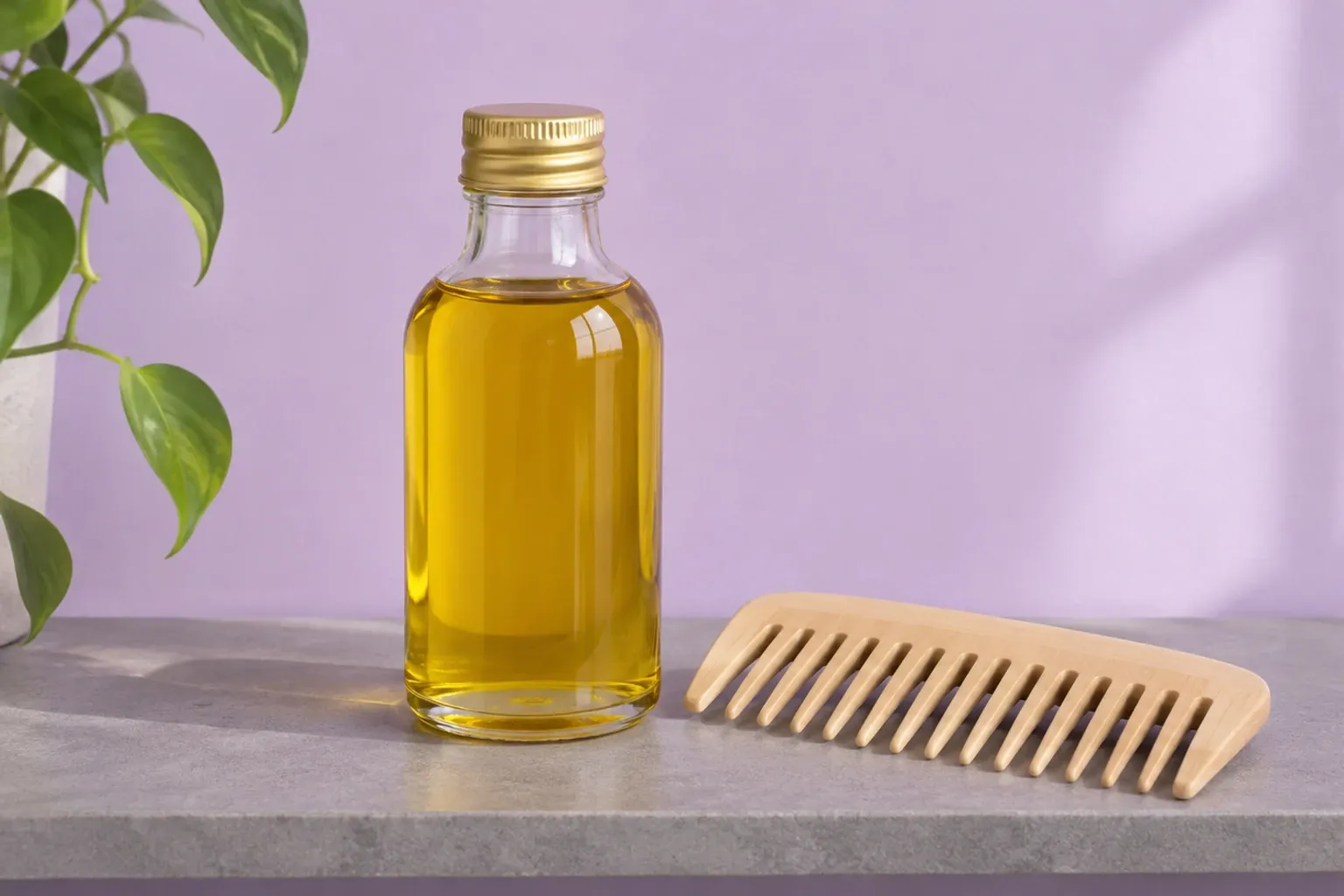
Hair oil can mean a single plant oil, a blend, or a finishing serum whose main smoothing ingredients are silicones. Those products can feel and behave differently, so the name on the front of the bottle is only a starting point. Think first about your aim: a pre-wash treatment, less friction while handling your lengths, or a smoother, shinier finish after styling. Then check the ingredients, try a small amount and see how your own hair responds.
What do you want the oil to do?
Start with the problem you want to solve. If your lengths catch when you comb them, you may be looking for more slip: a product that makes strands feel smoother and easier to handle. If the ends look dull, a finishing product may give them a more polished appearance. If you want to coat the hair before shampooing, a pure oil or a product specifically labelled for pre-wash use may be more suitable. These are different jobs, so a product that works well as a finish is not automatically the best choice for a pre-wash treatment.
Keep the goal modest and specific. Hair oil is not a substitute for conditioner, and a glossy finish does not mean that damaged hair has been permanently repaired. The strand is the part you are treating; focus on its feel, appearance and manageability. If you are building a wider routine, consider how oil fits alongside washing and conditioning in a hair care routine that suits you.
How do pure oils and silicone serums differ?
A pure oil is largely an oil ingredient, such as coconut oil. A blended hair oil can contain several oils alongside fragrance or other cosmetic ingredients. A silicone serum is a styling product built around silicone ingredients, sometimes combined with oils. The word “oil” on the front label does not tell you which kind you have: read the ingredient list and product directions rather than relying on the name or the feel in the bottle.
Their practical uses can overlap, but they are not identical. A plant oil may be chosen for a pre-wash application or as a small amount on the lengths; a serum is often used to smooth and finish the hair. Neither category is automatically better for everyone. Hair texture, density, condition and styling habits all affect whether a formula feels light, useful or too heavy. A blend may also combine both types of ingredient, so treat the label as a description to check rather than a guarantee of performance.
Research does not support treating all oils as interchangeable. In a study comparing coconut, sunflower and mineral oils, researchers reported that coconut oil reduced protein loss in the tested hair samples, while sunflower and mineral oil did not show the same effect under those study conditions; see the published comparison of the three oils. The finding is specific to that research and does not establish that coconut oil is the right choice for every person or every product. A later study examined penetration by several plant oils and reported that penetration varied with oil composition, rather than being a simple quality shared equally by all oils (research on plant-oil penetration into hair). These fibre studies help explain why formulas may differ, but they are not a personal product test.
What should you check on the label?
Look at the ingredient list, directions and any precautions before buying. The UK government’s guidance for consumers in Great Britain says cosmetic packaging should provide product information including ingredients and precautions, and advises people to read and follow the instructions. Its cosmetics guidance for consumers also says to be cautious when product information is missing or minimal. That makes the label useful for more than checking whether a product contains a named oil: it can tell you how the product is intended to be used and whether it includes ingredients you already know you avoid.
Consider the format as well as the headline ingredient. A dropper bottle makes it easy to dispense a liquid oil, while a pump or nozzle may deliver a serum differently. Look for clear directions on whether the product is intended for wet or dry hair and whether it should be rinsed out. Fragrance can matter if you prefer an unscented product. If the ingredient list is not available or the directions are unclear, choose a product with clearer information instead of guessing how to use it.
How can you apply hair oil without weighing your hair down?
Begin with a small amount. Warm it between your palms if the product directions allow, then smooth it over the mid-lengths and ends. Keep it away from the roots unless the product specifically says otherwise: the scalp is not the focus of this lengths-led approach, and applying a rich product there can leave hair looking greasy. You can add a little more if the first application is not enough; removing an excess is less convenient.
For a pre-wash treatment, distribute the product over the lengths before shampooing and follow the directions on the bottle. For a leave-in serum, start on damp hair if the label recommends that, then style as usual. If you prefer to use it on dry hair, try a very light application on the ends. Avoid rubbing the hair vigorously between your hands; smooth the product along the strands and handle them gently, especially if they tangle easily.
Change one thing at a time. If you introduce a new oil while also changing your shampoo, conditioner and styling method, it will be harder to tell what caused the difference. Try the product on an ordinary wash-and-style day, rather than before an event when you need a predictable finish. If you colour your hair, check the product directions and observe how the finish looks with your colour and styling routine. For a cut that relies on a defined shape, such as a French crop haircut, use only enough product to finish the lengths without obscuring the style.
How can you tell whether it suits your hair?
Judge the result after your hair has dried and been styled. Ask practical questions: do the ends feel easier to handle? Does the hair look smoother without losing movement? Is the finish clean rather than greasy? Does it still feel acceptable the next day? A product that looks glossy for a short time but leaves your hair limp may not suit your preferred finish, even if its ingredients sound appealing.
If the hair feels coated, looks stringy or loses volume, reduce the amount first. If that does not help, reserve it for the very ends, use it less often, or try a lighter formula. If the result is pleasant but does not last, check whether the product is intended as a leave-in finish or a pre-wash treatment; those directions point to different uses. When working with a prominent crown swirl, keep any finishing product light and use it alongside styling a cowlick with your haircut, rather than relying on oil to change the direction in which the hair grows.
There is no need to keep a product simply because it is popular or described as nourishing. Hair oil is a styling and care choice, and the useful measure is whether the formula fits your lengths, routine and preferred finish. Start small, follow the label, and let the result guide whether you keep using it.
Frequently asked questions
Should I apply hair oil before or after washing?
Either can suit a different purpose. A small amount of a pure oil can be used as a pre-wash treatment on the lengths if you want to wash it out afterwards. A light finishing serum is generally used on damp or dry lengths to smooth the surface and help with styling. Follow the product’s directions, and start with less than you think you need.
Can I use hair oil on fine hair?
You can try it, but fine hair may look flat or feel coated if the product is too rich or you apply too much. Choose a lightweight formula, keep it to the mid-lengths and ends, and work with a small amount. If the result is greasy or limp, use less, apply it only to dry ends, or switch to a lighter serum.
Can hair oil make hair grow faster?
A product applied to the lengths should be chosen for how it makes the hair feel and look, not as a promise of faster growth. The research cited here concerns effects on hair fibres, such as protein loss or oil penetration, rather than proof that applying oil to the lengths speeds growth. If you are concerned about hair loss, seek advice from a suitable health professional.
Related reading