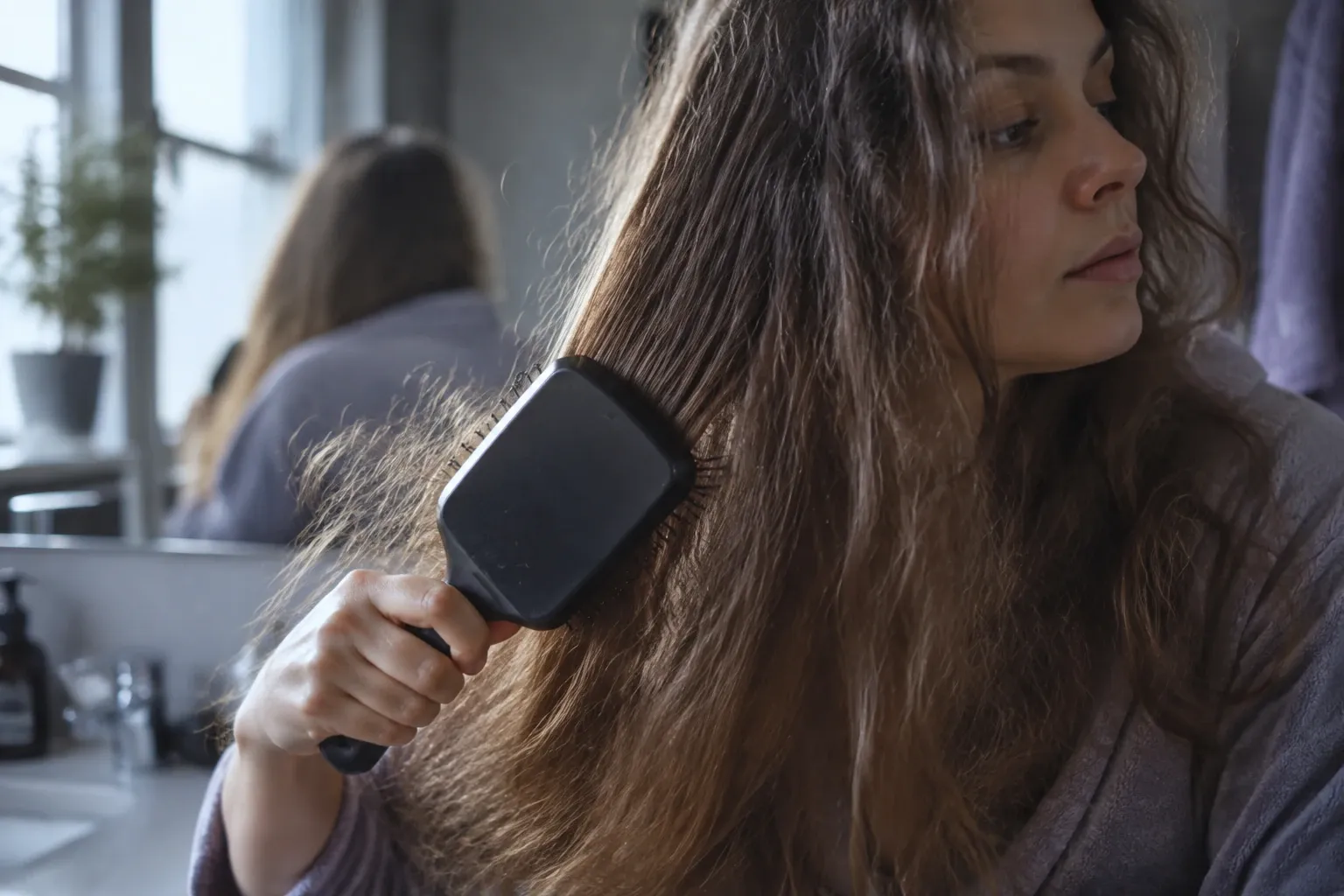
A calm, safe way to cut your own hair at home
You can tidy your hair at home if you keep the goal small and the method simple. Here’s how to decide what to cut, choose a safe technique and check the result.

Maybe you’ve missed an appointment, your fringe is in your eyes or you just want to stretch the time between salon visits. A DIY trim can work if you keep your ambitions modest and use the right tools. Below you’ll find when a home cut is reasonable, what to prepare, the safest methods for different hair and goals, step‑by‑step instructions, and simple checks so you know when to put the scissors down.
When is a DIY cut a good idea?
- Reasonable at home: light fringe/bangs tidy, dusting split ends, evening out a one‑length hem on long hair, or buzzing short hair with one clipper guard.
- Best avoided: major style changes, layered bobs/wolf cuts, fades with multiple guard changes, or any cut that needs precise sectioning at the back. A dermatologist‑led overview also suggests seeing a pro when hair is fragile or you’re noticing hair loss (American Academy of Dermatology).
If you’re unsure about your hair’s behaviour, build a simple care plan first so it sits better between cuts; our guide on a hair care routine that suits your hair walks you through it.
What should you prepare before you cut?
- Tools that help: hair‑cutting shears (not household scissors), sectioning clips, a wide‑tooth comb, a fine comb, a hand mirror for the back, and clippers with guards if you’re buzz‑cutting. For short styles, experts recommend using guards to keep lengths consistent (Consumer Reports).
- Hair condition: most people should handle wet hair as little as possible because it breaks more easily; tightly curled or textured hair is often safer to detangle and work with when wet (American Academy of Dermatology).
- Lighting and mirrors: position yourself with bright, even light and set a second mirror behind you so you can check the back between snips.
- Set a limit: decide your maximum cut (for example 3–6 mm) and stop when you reach it. On average, scalp hair grows about 1 cm per month, so taking less now saves weeks of regrowth if you cut too much (MedlinePlus).
Which home method suits your hair and goal?
- Straight hem on long hair: best for medium to long, mostly one‑length cuts.
- Fringe/bangs tidy: snip tiny vertical “points” into the very ends for softness, never a big horizontal chop.
- Split‑end dusting: twist small sections; trim only the flyaway tips.
- One‑guard buzz: suitable for very short styles; pick one guard and work evenly around the head.
If you’re matching technique to texture or curl pattern, our plain‑English hair type chart can help you anticipate shrinkage and spring.
Step‑by‑step: a safe way to cut
For a straight hem (long hair)
- Start with clean, completely dry hair brushed smooth. Create a clean middle part and bring hair evenly over the shoulders.
- Place a comb horizontally at the very ends. Trim no more than a few millimetres under the comb. Keep your chin level.
- Check lengths by bringing equal sections forward; correct only the longer side.
For fringe/bangs maintenance
- Work on dry hair that falls naturally. Clip the rest away.
- Take a very small triangular section; twist lightly and point‑cut the tips vertically for softness. Take off 1–2 mm at a time.
- Release the next wafer‑thin section and repeat. Stop before you reach your planned length; reassess after a gentle comb‑through.
For a one‑guard buzz
- Wash, dry and comb hair. Fit the chosen guard.
- Start at the sides, move against the growth in steady strokes, then the back, then the top. Maintain gentle, even pressure.
- Edge lines last with a longer guard first, then shorter if needed. Using guards helps you avoid gouges and keeps symmetry.
Handling hair safely while you work
- Be gentle with wet hair and choose wet‑work only if your texture needs it to avoid breakage; this is especially relevant for tightly curled or textured hair.
- If you nick your skin, clean the area and apply pressure; minor cuts usually heal in a few days. Seek help if the cut is deep or shows signs of infection, says the NHS.
How to check (and when to stop)
- Cross‑check lengths: split hair into left/right sections, then swap over your shoulders to compare. Correct the longer side only.
- Movement test: shake hair gently and see if the ends sit evenly and naturally.
- Light test: under bright light, scan for long strays; trim only the very tips.
- Time test: step away for five minutes, then recheck. If you’re tempted to “even it up” again and again, stop—this is how inches disappear.
What this can’t replace
A DIY tidy keeps you going between appointments; it isn’t a substitute for a precision cut, colour correction or help with shedding or breakage. If you notice more fallout, itching or scalp pain, book with a professional. Dermatologists advise pausing at‑home chemical services and seeking expert care when hair is fragile or you’re experiencing hair loss. If your hair struggles to absorb moisture, our explainer on low porosity hair can help you adjust your wash and conditioning before you pick up the scissors again.
Frequently asked questions
How much should I cut at home?
Keep first trims tiny: 3–6 mm on ends or a single guard step with clippers. Scalp hair grows roughly 1 cm (about ½ inch) a month on average, so taking less gives you room to correct later, according to <a href="https://medlineplus.gov/hairproblems.html" target="_blank" rel="nofollow noopener">MedlinePlus</a>.
Should I cut my hair wet or dry?
Most people get less breakage handling hair when it’s dry, but tightly curled or textured hair detangles and handles better when wet, say dermatologists at the <a href="https://www.aad.org/public/diseases/hair-loss/hair-care/styling" target="_blank" rel="nofollow noopener">American Academy of Dermatology</a>. Cut slightly longer than your goal, as hair can appear shorter when it dries.
Are kitchen scissors okay for hair?
No. Use hair‑cutting shears or guarded clippers. Dull household scissors bend hair and force you to saw at a section, causing uneven results and split ends. Consumer experts also advise guarded clippers for short cuts at home (<a href="https://www.consumerreports.org/health/how-to-cut-hair-at-home-a9030395764/" target="_blank" rel="nofollow noopener">Consumer Reports</a>).
What if I nick my skin while cutting?
For minor nicks, clean the area and apply pressure; most small cuts heal in a few days. Seek medical advice if there’s a risk of infection or the cut is deep, per <a href="https://www.nhs.uk/conditions/cuts-and-grazes/?ContensisTextOnly=true" target="_blank" rel="nofollow noopener">NHS guidance</a>.
When should I avoid a DIY haircut?
Skip home cutting if you want a big style change, complex layering, precision bobs, or if you have hair or scalp conditions. The <a href="https://www.aad.org/public/diseases/hair-loss/treatment/tips" target="_blank" rel="nofollow noopener">American Academy of Dermatology</a> advises seeing a professional for hair loss or scalp disease, and postponing chemical services if hair is fragile.
Related reading