How to care for wavy hair and bring out its natural shape
If your waves disappear after washing or feel heavy with styling products, the answer may be a simpler routine rather than more steps. Start with your scalp, hair thickness and the finish you want, then adjust one choice at a time.

Wavy hair can sit somewhere between straight and curly, and its needs vary: fine strands may lose shape under rich products, while thicker or drier lengths may welcome more conditioning. A routine that works for someone else is only a starting point. Notice how your scalp feels, how quickly your roots become oily and whether your lengths feel dry or easily tangled. These clues help you choose how to wash, condition and style without treating every wave the same.
What makes wavy hair behave differently?
“Wavy” describes the pattern you see, not a complete care plan. Your strands can be fine or coarse, your overall hair can be sparse or dense, and your scalp may be oily while the ends feel dry. Waves may also vary across your head or change with length, a haircut, colour services and styling habits. That is why a product labelled for waves is not automatically the best match.
Look at the hair and scalp separately. Hair density means how much hair you have overall; strand thickness describes whether each strand feels fine or coarse. Then notice where the wave begins, whether it holds after drying, and what happens when you add conditioner or styling product. If roots lose lift but the ends feel parched, your scalp and lengths are asking for different things.
A practical routine can be part of a broader hair care routine for your hair type, but you do not need a complicated set of products to begin. Focus first on cleansing the scalp, conditioning the lengths and handling wet hair gently.
How should you choose shampoo and conditioner?
Choose shampoo mainly for what your scalp needs: how quickly it becomes oily, whether it feels comfortable, and whether you have a specific concern such as persistent flakes. Conditioner is mainly for the lengths, where it can help with slip and detangling. A light conditioner may suit waves that flatten easily; a richer formula may feel more comfortable on coarse, dry or chemically treated lengths. These are useful starting points, not rules based on wave pattern alone.
A Gloucestershire Hospitals NHS hair-care leaflet recommends conditioning each time you wash and using your fingertips when washing. For wavy hair, apply shampoo chiefly to the scalp and let the rinse carry it through the lengths rather than scrubbing the hair itself. Spread conditioner through the mid-lengths and ends, then rinse according to the product directions. If your roots feel coated afterwards, use less conditioner or keep it farther from the scalp.
Do not use a dandruff shampoo as an ordinary wave-defining product. If you have flakes or an itchy scalp, follow the label or a clinician’s advice. The American Academy of Dermatology notes that some dandruff shampoos need to remain on the scalp for about 5 to 10 minutes, while the directions and recommended frequency depend on the product and hair type. Its examples range from daily or alternate-day washing for some people with fine or naturally straight hair or an oily scalp to washing as needed for coarse, naturally curly or coily hair; these examples are not a prescribed schedule for every person with waves.
Should you air-dry, diffuse or use styling products?
Air-drying avoids a heated tool, but it is not the only reasonable option. If you use a hairdryer, try a lower heat setting and avoid keeping hot airflow on one area for a long time. A diffuser attachment can distribute airflow while you dry, but no attachment guarantees a particular result. If you use a straightening iron, the AAD advises using it on dry hair at low or medium heat and no more often than every other day; it also says to leave a curling iron in place for only a second or two. Those are damage-reduction tips, not a target to style that often.
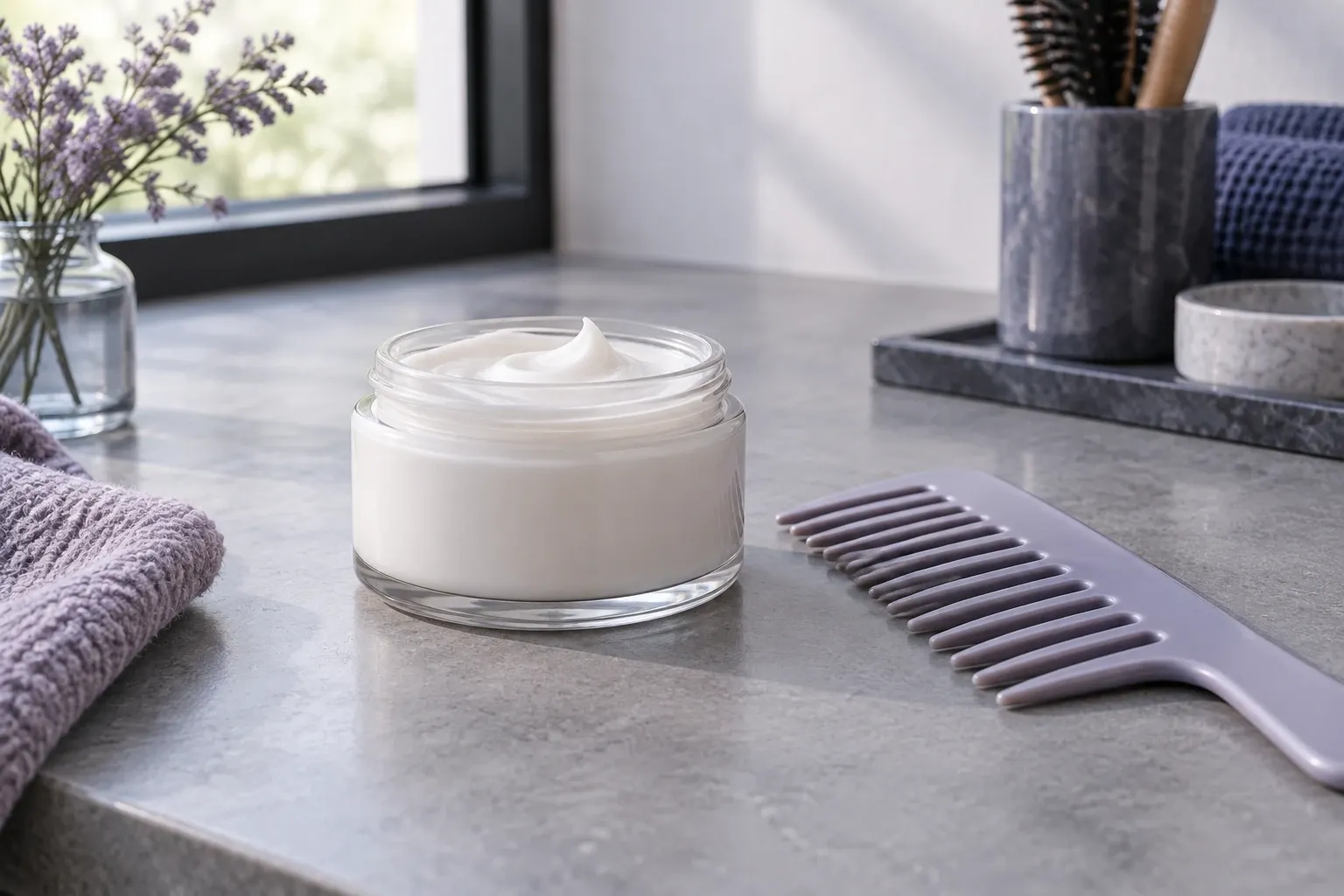
For natural definition, work with wet or damp hair and test a small amount of one styling product, such as mousse or gel. Scrunch the product gently upwards into the lengths, then let the hair dry without repeatedly touching it. If your waves feel stiff after drying, gently squeeze them once they are fully dry; if they feel sticky or limp, reduce the amount next time. A leave-in conditioner or cream may help dry lengths feel easier to manage, but it can weigh down finer waves. You can also explore a textured fringe that follows natural movement if you are considering a cut that works with your pattern.
What should you do about tangles and frizz?
Start by loosening knots gently rather than pulling a brush through them. The AAD says wet hair breaks more easily when combed or brushed for most people, so handle it as little as practical. Its advice also notes that people with tightly curled or textured hair may brush while wet to reduce breakage; wavy hair covers a broad range, so choose the approach that detangles your hair with the least tugging. A wide-tooth comb or fingers can help you work from the ends upwards, especially when conditioner gives the strands more slip.
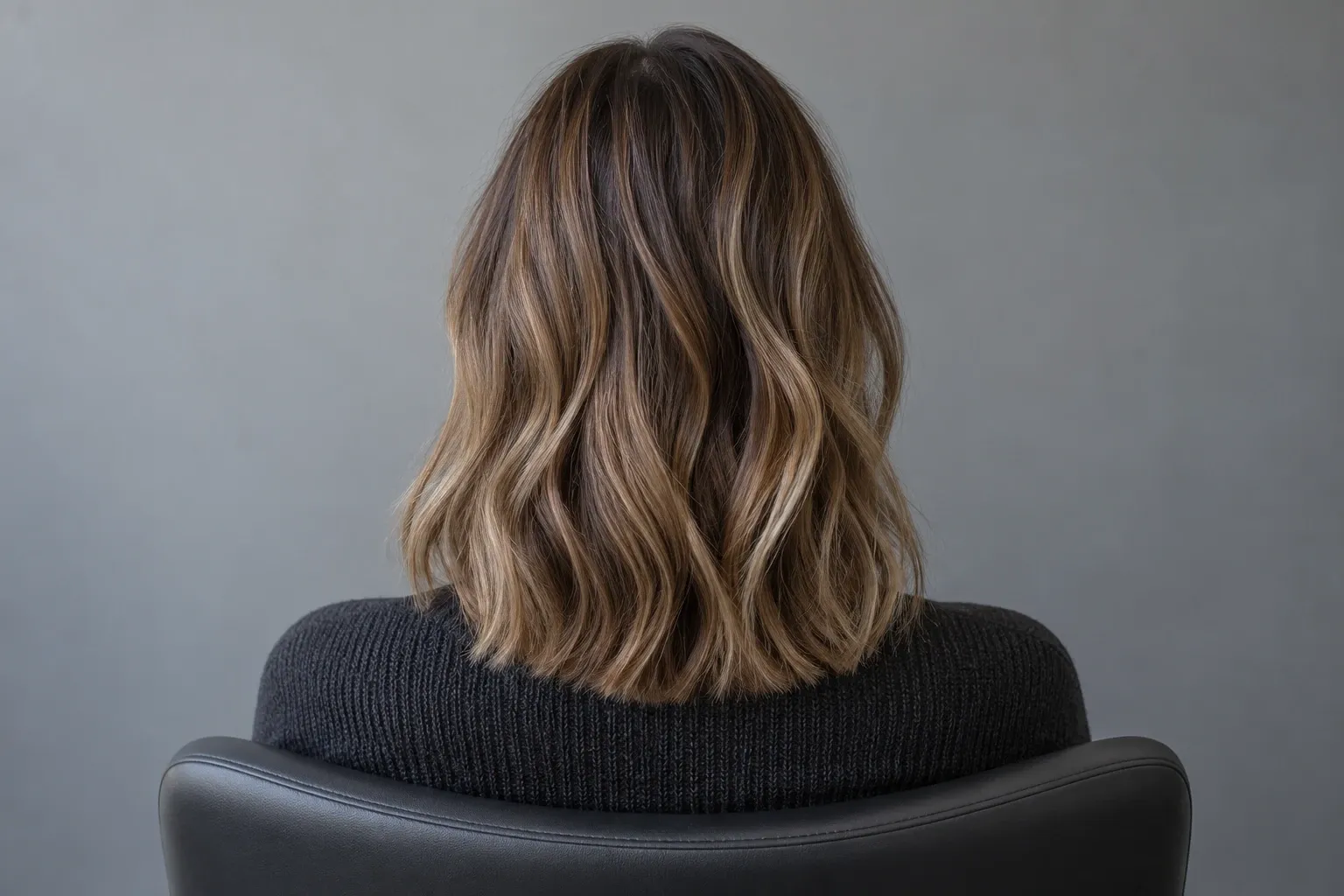
For drying, press or wrap the hair in a towel instead of rubbing it vigorously. You can try a soft T-shirt or a smooth towel if your usual towel leaves the lengths looking rough, but treat that as a preference to test, not a guaranteed fix. Avoid frequent tight ponytails or styles that pull at the hairline. If your hair is coloured, remember that its needs may differ from untreated hair; for example, brown hair with blonde highlights may need you to consider both the colour service and the condition of the lengths when choosing care.
How can you tell whether your routine is working?
Judge the result by a few observable signs rather than whether every wave looks identical. After washing, does your scalp feel clean and comfortable? Do the lengths detangle without excessive pulling? Once dry, do you like the balance between definition, softness and volume? Note what you used and what the hair looked or felt like. Change one variable at a time, such as using less styling product or moving conditioner away from the roots, so you can see what made a difference.
If you use dry shampoo between washes, treat it as an oil-absorbing styling aid rather than a replacement for cleansing. The AAD says it does not clean the hair and recommends washing with regular shampoo and water after one or two dry-shampoo uses. If a product causes irritation, stop using it. Persistent itching, scaling or noticeable hair loss may need advice from a GP or dermatologist rather than another styling product.
Frequently asked questions
How often should you wash wavy hair?
There is no single schedule for all wavy hair. Wash when your scalp feels oily, uncomfortable or in need of cleansing, and consider how quickly your roots become greasy. Fine hair or an oily scalp may need washing more often than dry, thicker lengths. If you have persistent flakes or itching, treat that as a scalp concern rather than simply changing your styling routine.
Should you brush wavy hair when it is dry?
Try both gentle detangling on damp, conditioned hair and careful dry styling, then see which leaves your waves less disrupted. Dry brushing can separate wave clumps and make the overall shape look fuller or fluffier; detangling wet hair may be easier for some people but wet strands need gentle handling. Use a wide-tooth comb or fingers and avoid pulling through knots.
Can you use a hair mask on wavy hair?
You can try a rinse-out mask if your lengths feel dry, rough or difficult to detangle, but it is not essential for every wavy routine. Start with the product directions and concentrate on the lengths rather than applying more than needed at the roots. If your hair feels limp or coated afterwards, use it less often or return to a lighter conditioner.
Related reading
Brown hair with blonde highlights: choose a shade and placement that suits you
Read more →