How to choose and use a hair mask for dry lengths
If your lengths feel dry or rough, a rinse-out hair mask may add conditioning beyond your usual wash-day routine. The useful choice depends on how fine or thick your hair is, what the product is designed to do and the instructions on its label.
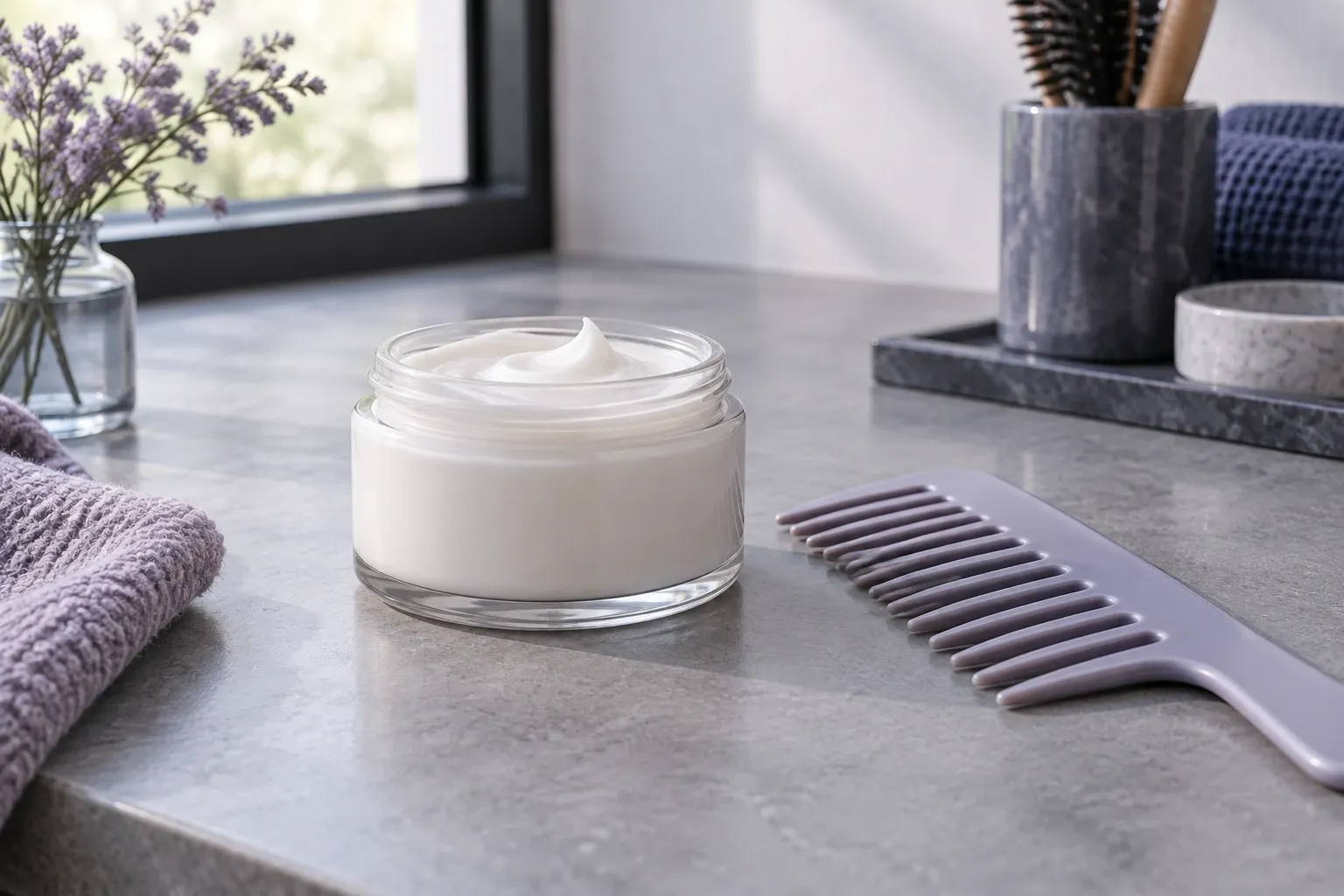
Dry ends can make hair harder to detangle and style, but a richer product is not automatically a better fit. A hair mask might be a rinse-out treatment, a conditioner alternative or a multi-use formula, so the name alone does not tell you how to apply it. Start with the feel and condition of your lengths, then check the product directions. The examples below show why timing and placement should follow the individual label rather than a universal rule.
What should you look for in a hair mask?
Start with the problem you want to address. If your lengths feel dry, rough or difficult to comb, a conditioning mask may be worth trying. If they feel fine already but lack volume, a rich, heavy-feeling formula may not be the best first choice. A mask is a cosmetic conditioning step: do not expect it to make hair grow, permanently mend split ends or reverse damage. Look for claims that match your aim, and treat them as the maker’s description of that product rather than a guaranteed result for everyone.
Check the label for three practical details: where to apply it, whether it is rinsed out, and how long it should stay on. Also note whether it is meant to replace conditioner or supplement it. A product called a “mask” might have more than one use, while another is designed for one specific routine. If the directions are unclear, use the packaging as the deciding reference, not a time or technique borrowed from another product.
Hair texture and cut also affect how much product feels comfortable. Fine hair can be weighed down by excess product, while thicker or longer lengths may take more to coat evenly. These are starting points, not fixed rules: try a small amount and adjust after you see how your hair feels when dry. If you are building a wider routine around washing, conditioning and styling, the hair care routine basics can help place a mask in context.
How is a mask different from conditioner or leave-in?
A daily or regular conditioner is usually the routine step for detangling and softening after shampoo. A rinse-out mask is generally used as a treatment step, but product directions differ: some can replace conditioner in that wash, while others are intended as an occasional addition. “Leave-in” means a product is designed to remain on the hair rather than be rinsed away. Do not turn a rinse-out treatment into a leave-in simply by using less water; only do that when its label explicitly offers that use.
A clear example of a multi-use formula is Garnier’s Banana & Shea Hair Food. Its UK product page gives three distinct ways to use that product: as a conditioner, as a rinse-out mask left on for three minutes, or as a small amount of leave-in on wet or dry lengths. Those are directions for this specific formula, not a general mask schedule. The same page describes it as a 400 ml product, but size does not indicate how much to apply per use. Follow the directions for the option you choose and rinse when using it as a mask. Garnier’s Banana & Shea Hair Food instructions
Other masks have a single rinse-out routine. Davines says to apply The Renaissance Circle to towel-dried hair after shampooing, leave it on for ten minutes, then comb through and rinse. That illustrates why timing should be product-specific: the directions for this mask are not interchangeable with Garnier’s three-minute example. Read the current package directions for the product in your hand, particularly if online product information and packaging differ. Davines’ directions for The Renaissance Circle
Which formula suits fine or thick lengths?
For fine hair, start with a lightweight-feeling formula and a modest amount, concentrating on dry mid-lengths and ends rather than coating the roots. Fine strands can lose movement when coated in too much conditioning product, so assess the result once the hair has dried. If it feels flat or greasy, try less next time, apply lower down the lengths or use the product less often, as its instructions allow.
For thick hair, longer hair or ends that feel especially dry, you may need more product to spread it through evenly. That does not mean you need to apply a thick layer: divide the hair into sections and use only enough to cover the areas you are treating.
Your cut also changes how you distribute a treatment. Layers create shorter and longer sections, so work methodically rather than smearing product over the outside alone. If you have layers and want to keep them easy to style, choose a layered cut for your routine with your usual drying and detangling habits in mind. The mask should fit the hair you have, not require a complicated application routine.
How do you apply a rinse-out mask?
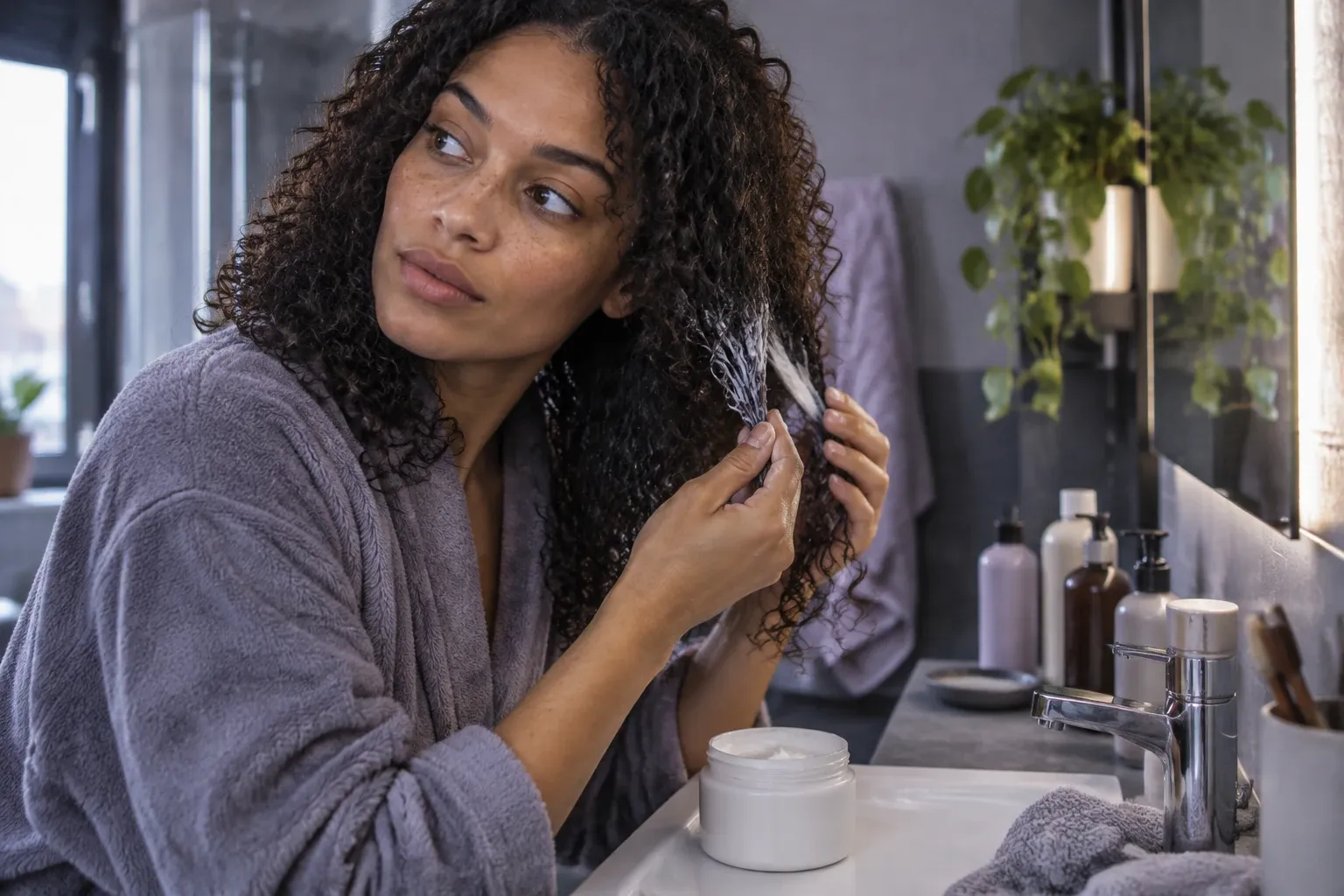
Use the product’s own instructions as your sequence. A common pattern for rinse-out masks is to shampoo first, remove excess water if the label calls for damp or towel-dried hair, distribute the mask where directed, wait for the stated time and rinse thoroughly. Do not assume every product belongs on freshly washed hair: some are designed for a different point in the routine. Follow the packaging if it conflicts with this general outline.
Use your fingers or a wide-tooth comb only if appropriate for your hair and the product directions, and work gently through tangles rather than pulling. Apply in sections if that helps you cover the lengths evenly. Unless the label specifically includes the scalp, keep a lengths-focused treatment on the lengths and ends. Rinse until the hair no longer feels coated; a leave-in version, where the product permits one, is the exception and should be used in the small amount directed.
The time on the label matters more than adding extra minutes. Garnier’s example specifies three minutes for one use, while Davines’ example specifies ten minutes for another product. Neither establishes a universal minimum or maximum. More time is not automatically more useful, and do not add heat or cover your hair unless the product instructions say to.
How can you tell whether the choice is working for you?
Judge the result by practical signs after rinsing and drying: does the hair detangle more easily, feel comfortable rather than coated, and sit as you like? Compare like with like by keeping the rest of your routine broadly consistent while you try a mask. One use may tell you whether the weight or feel suits you, but it cannot establish a lasting repair or growth effect.
If the hair feels too soft, limp or coated, scale back the amount, move application further towards the ends, or leave more time between uses. If the product does not make detangling or manageability easier, check that it matches your concern and that you followed its directions. For masks that give a recommended frequency, use that as the starting point rather than copying another brand’s schedule.
Keep the label and your own results in view. A useful mask is one whose directions suit your wash routine and whose finish feels right on your hair. If you colour, chemically treat or have a sensitive scalp, check product cautions and ingredient information before use, and stop if you experience irritation.
Frequently asked questions
Should I apply a hair mask to the roots?
Follow the directions for your particular product. For a rinse-out mask intended for dry or damaged lengths, begin at the mid-lengths and ends, where hair often needs extra conditioning, and keep it off the scalp if the label says to do so. Some products are specifically designed for scalp use, so do not assume every mask has the same application area.
Can I use a hair mask every time I wash my hair?
There is no single frequency that suits every mask and every head of hair. Check the label first, then judge by how your hair behaves: if it feels limp, coated or difficult to rinse, use less or space applications further apart. If the product is designed to replace conditioner in that wash, follow that instruction rather than automatically layering both.
Do I need conditioner after a rinse-out hair mask?
Check the product instructions. Some masks are intended to take the place of conditioner for that wash, while others are an occasional addition to a routine that still includes conditioner. Applying both by default may leave some hair feeling too coated. If your lengths still tangle after rinsing, consider whether the mask is suited to your hair and whether you distributed and rinsed it thoroughly.
Related reading