Brown hair with blonde highlights: choose a shade and placement that suits you
If you want more brightness without losing the depth of brown hair, the shade and placement of your highlights matter as much as how light they are. Use your starting colour, preferred upkeep and hair condition to shape a realistic plan.
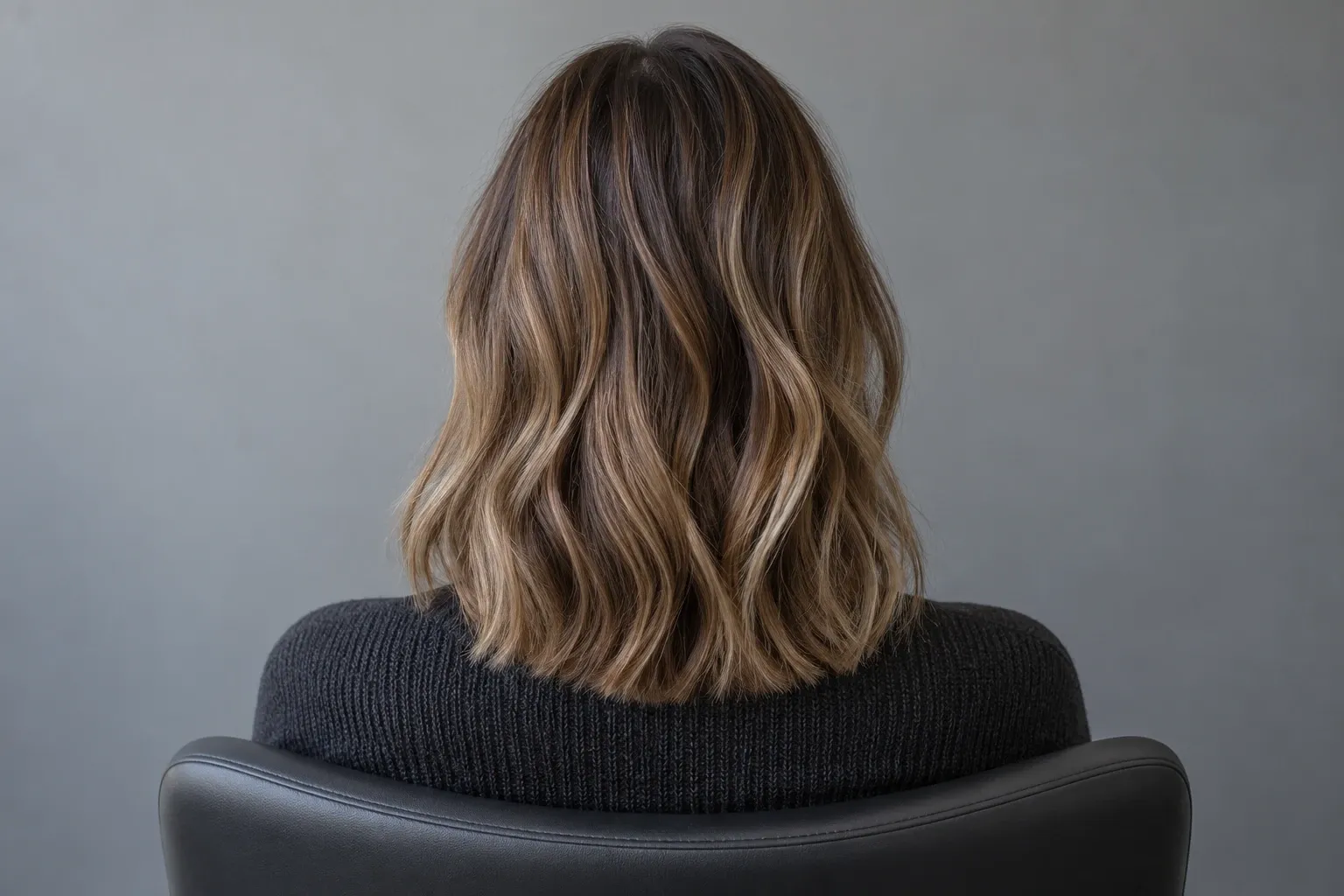
You may be choosing between a subtle lift around your face and brighter pieces throughout your hair, or wondering whether blonde will suit your particular shade of brown. The answer depends on the contrast you want, how the colour grows out and what your hair has already been through. Think about those points before settling on a reference photo or technique. The options below explain what to discuss at a colour appointment, how to care for lightened lengths and what to check when the result is finished.
Which blonde tones work with your shade of brown?
Start with the overall impression you want, rather than choosing a blonde name in isolation. Beige, honey and caramel tones can create a gentler contrast against many brown bases; cooler beige or ash shades may give a more muted effect. These are visual starting points, not rules based on skin tone: the same colour can look different in different light, and a photo’s filter or styling can change how warm it appears.
Look at reference pictures in daylight and compare the brown base as well as the highlights. A useful photo shows the placement, root area and ends, not just a bright front section. If you are unsure, ask for a conversation about a small, face-framing change before committing to a more extensive application. Describe what you like in the image, such as fine pieces, a brighter outline or a blended transition, rather than asking for a shade name alone.
Your starting colour also matters. A lighter brown base may need less contrast to make blonde pieces noticeable, while dark brown hair can call for a bigger shift to reach a pale blonde. Previously coloured hair, existing highlights and the condition of the ends can all affect what is practical in one appointment. Be ready to describe colour and chemical services you have had, including home colour, so the colourist can take them into account.
How do foils, balayage and face-framing pieces differ?
Foils separate selected sections while they are lightened. They can create a more even, visible pattern of highlights, including pieces that begin nearer the roots. Fine sections can give a softer effect; wider or more numerous sections usually make the result look brighter and more pronounced. Ask how much of your head will be covered, since a partial placement and a fuller set of highlights will not look the same.
Balayage is a freehand approach in which colour is painted onto selected sections. The placement can leave more of the natural base visible near the roots and blend into lighter lengths. That softer transition may make new growth less noticeable, but “balayage” does not automatically mean subtle or low upkeep: the final effect depends on how high, light and dense the painted sections are.
A face frame concentrates brighter pieces around the front. It can bring light to the areas you notice most without asking for the same brightness everywhere. You could pair it with finer highlights through the rest of the hair, or keep the change limited to the front. If a fringe is part of your look, consider how the colour will sit when it is styled; these textured fringe ideas can help you think about movement and shape alongside colour.
There is no universal appointment interval for every technique or head of hair. Wella Professionals describes classic foil or root-to-tip highlights as lasting about 8 to 10 weeks on average, and balayage or ombré as potentially lasting 12 to 16 weeks before refreshing, while noting that hair type, technique and home care affect the timing. Treat those figures as a commercial source’s general estimates, not a schedule you must follow. Ask what would need refreshing in your own look: root growth, tone, brightness through the lengths, or a combination.
What should you discuss before lightening your hair?
Take two or three reference images that show different aspects of the result you want. One might show the overall brightness, another the root blend, and a third the tone. Explain what you would not like, too: for example, a strong stripe at the roots or very pale ends. Then discuss these practical points:
- How much contrast do you want against your natural brown?
- Should the brightest pieces sit around your face, throughout the hair, or mainly on the ends?
- How visible would you be comfortable with regrowth becoming?
- What colour or chemical treatments have you used before, and when?
- How will the plan change if the hair cannot safely reach the lightness in the picture?
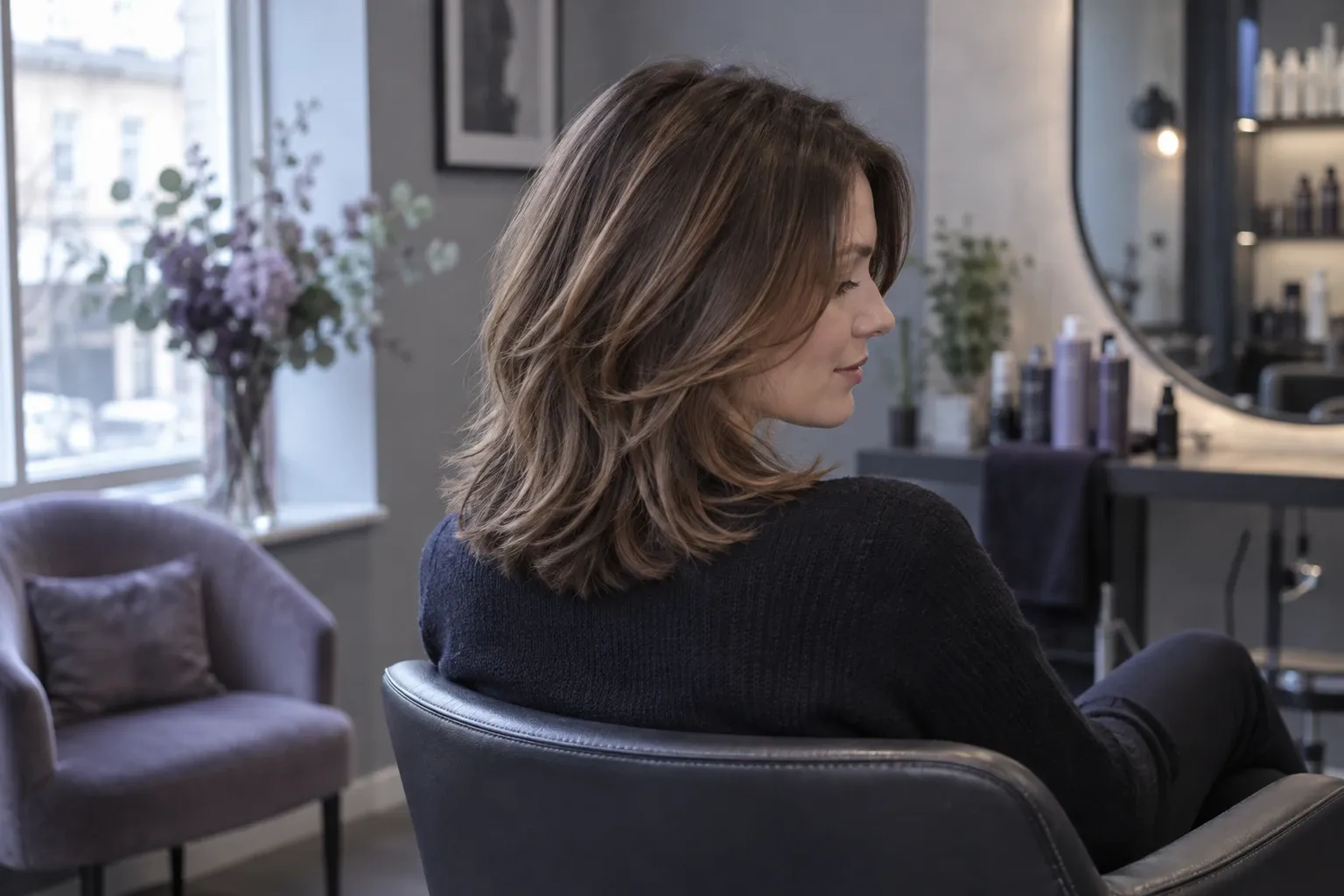
Ask for a realistic description of the first result and any later appointments it may take to move lighter. Lightening is a chemical process, and a dramatic reference photo may not be achievable in one session without compromising the condition of the hair. If your lengths are already dry, fragile or breaking, say so before deciding. Colour placement should work with the cut and texture you have, not only with a styled photograph. For a shape that moves around the shoulders, you might also consider how mid-length layers can work with your texture.
If you are colouring at home, follow the specific product instructions and do not leave colour on longer than directed. The NHS notes that hair-dye reactions can take up to 72 hours to appear and advises following the product’s test instructions; its guidance also says to test a strand at least 48 hours beforehand. A strand test checks how the hair responds and looks, while a skin allergy test is a separate precaution where the product instructions call for it. Stop using a dye if you react, and seek urgent help for symptoms such as sudden swelling of the mouth or throat or difficulty breathing.
How can you care for highlighted lengths between appointments?
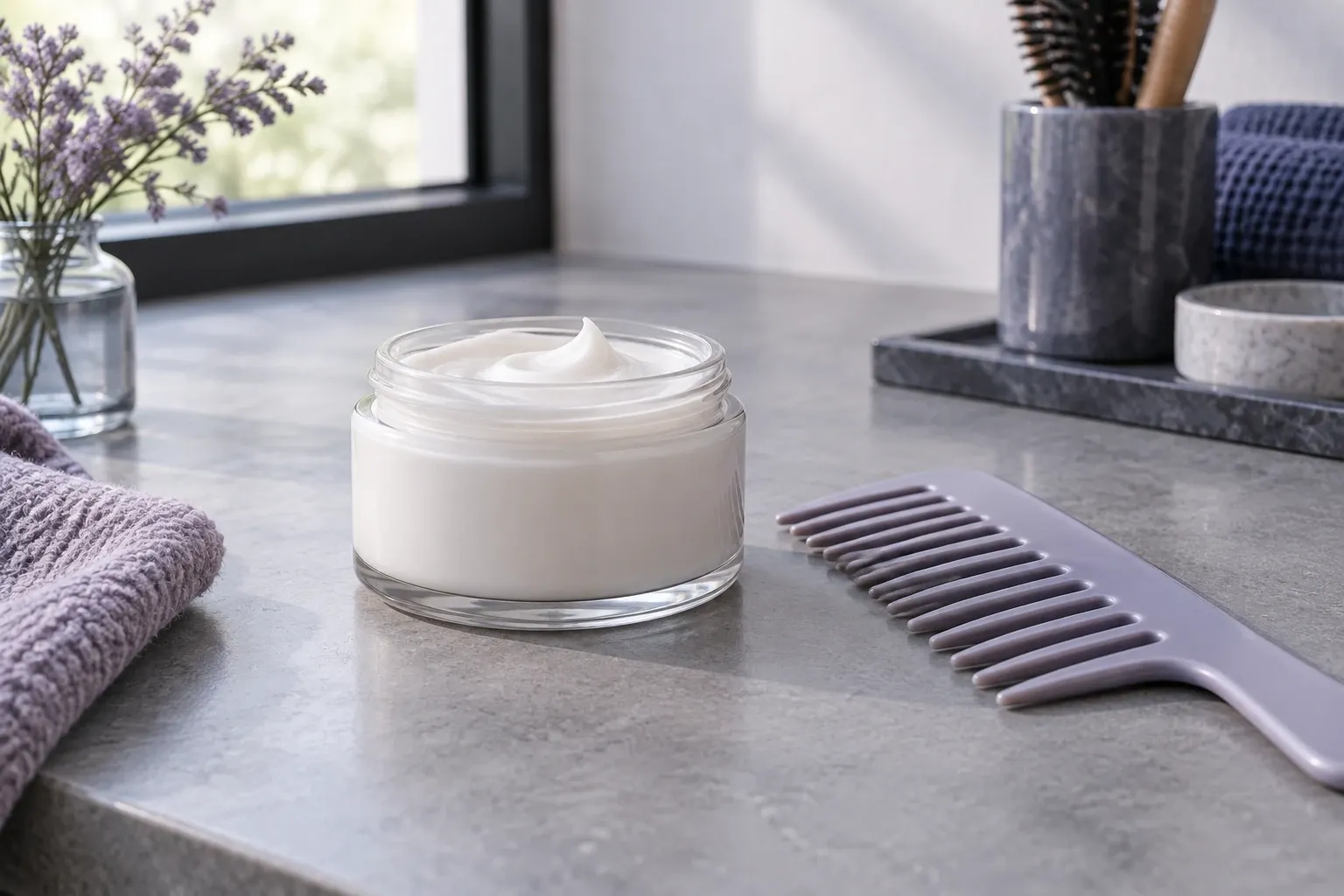
Lightened pieces may feel drier or become harder to detangle, so adjust care to what your hair actually needs. Use a conditioner after washing and concentrate richer products on the mid-lengths and ends if those are the driest areas. A mask can be an occasional addition when your lengths need more conditioning; choose one that suits your texture and follow its directions. This approach to choosing a hair mask can help you decide where it fits without turning it into a compulsory step.
The American Academy of Dermatology says leave-in conditioner can be useful for colour-treated or heat-styled hair, as well as for hair that is dry, long, curly or prone to tangling. It recommends applying spray leave-in conditioner from the mid-lengths to the ends and working it through with your hands. Check the label before relying on it as heat protection: the AAD notes that a product should identify itself as a heat protectant if it is intended to do that.
Keep heat styling moderate. The AAD advises using flat irons on dry hair at a low or medium setting and no more often than every other day; it also advises keeping a curling iron in place for only a second or two. Those are general styling tips, not a guarantee that heat cannot cause damage. Letting hair partly air-dry before styling and reducing how often you use heated tools can help limit exposure. For a routine tailored to your wash pattern, scalp and texture, build on these hair-care routine basics.
You do not need to add every colour-care product at once. Notice whether the blonde is becoming warmer than you like, whether the ends feel rough, and whether your usual styling leaves hair tangled. If tone is the issue, ask whether a toner or a suitable toning product is appropriate; if the lengths feel dry, adjust conditioning first. A purple shampoo is not a substitute for a careful colour plan, and it may not be necessary if you like the warmth in your highlights.
What should you check when the colour is finished?
Before leaving the appointment, look at the result in more than one light if possible. Check the front, sides and back, and see how the highlights look both near the roots and through the ends. Ask the colourist to show you how the placement sits when your hair is parted as you usually wear it. If you have a fringe or layers, check the colour with those sections in their everyday position, not only swept aside for the finish.
Compare the result with the goal you agreed on: the level of contrast, the overall warmth or coolness, and where the brightest pieces sit. It may look more pronounced when freshly styled than it does in your normal routine, so ask how to recreate the finish at home and which care steps matter most. Clarify what to do if the tone changes or your scalp feels uncomfortable after the appointment.
The NHS lists stinging, burning, itching, soreness and blisters among possible hair-dye reaction symptoms, and says reactions can appear within 72 hours. If you feel a reaction while colour is being applied, tell the colourist immediately. If symptoms develop later, follow NHS advice; sudden swelling of the lips, mouth, throat or tongue, or difficulty breathing, requires emergency help. A good-looking highlight is only one part of the decision: the colour should also fit your upkeep preferences and leave you comfortable with how your hair feels.
Frequently asked questions
Do blonde highlights show up on dark brown hair?
Yes, but the amount of contrast depends on how light the selected pieces become and how much of the hair is coloured. A few caramel or honey-toned strands can read as soft dimension, while much lighter blonde creates a bolder difference. Bring a photo taken in natural light and ask what degree of lightening is realistic for your hair history and condition.
Are balayage highlights lower maintenance than foils?
They can make regrowth less obvious when the lighter colour is blended gradually from the roots, but the result depends on placement and your natural colour. Foils can create more defined brightness close to the scalp. Ask the colourist to explain how each option will grow out on your hair and what kind of refresh, if any, you would want.
Should I use purple shampoo on brown hair with blonde highlights?
Purple shampoo is not essential for every highlighted brunette. It is generally used to counter unwanted yellow tones in lighter pieces, but frequent or unsuitable use may leave hair looking dull or change its appearance. Ask whether your particular blonde needs toning, and follow the product directions rather than assuming it should replace your regular shampoo.
Related reading