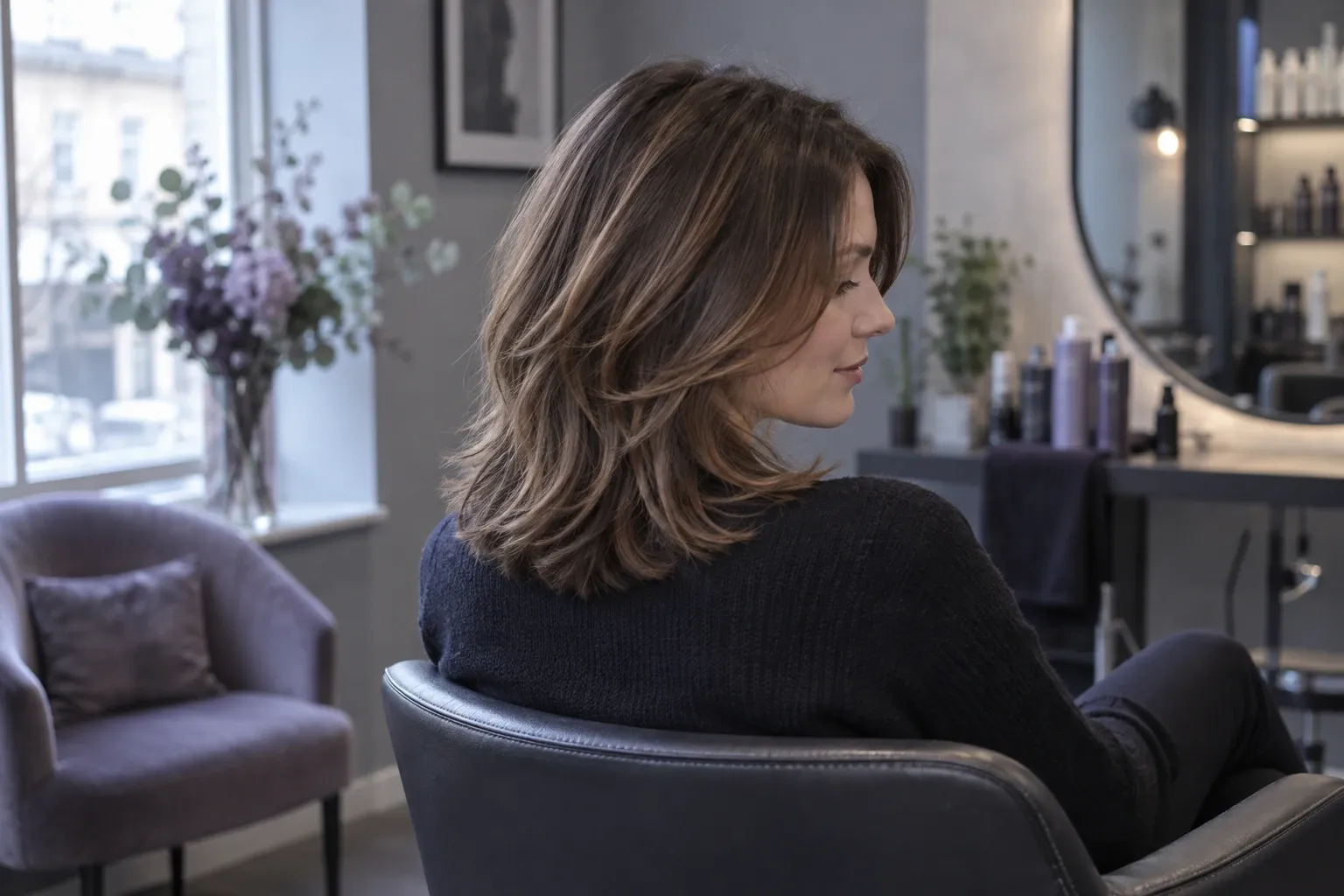
Textured fringe hair that works with your natural movement
A textured fringe can look soft and undone, but its shape depends on how your hair naturally falls and how much time you want to spend styling it. Use your texture, preferred length and daily routine to choose a version you can wear comfortably.

You may like the broken-up, relaxed look of a textured fringe but be unsure whether it will suit your hair or demand a daily styling routine. The useful starting point is not a trend photo on its own: notice how your fringe area behaves when it dries, how much movement you want across your forehead and whether you are happy to refresh it each morning. Those details can help you describe a cut that works with your hair rather than against it.
What makes a fringe look textured?
A textured fringe is shaped to show movement and separation rather than forming one solid, straight line across the forehead. Depending on the cut, that can mean softly irregular ends, layers within the fringe or longer pieces that blend into the hair at the sides. “Textured” does not mean that every strand needs to look messy: the aim is a shape that still feels intentional when you style it lightly or let your natural pattern show.
The term covers several looks. A short, choppy fringe sits higher and makes its outline more noticeable. A soft French-style fringe can fall nearer the brows and blend towards the cheekbones. A curtain or waft fringe parts or sweeps to the sides, leaving more of the forehead open. British Vogue’s overview of the French-girl fringe describes a softer, textured line and styling intended to keep the result relaxed rather than overly precise. Treat these as starting points to discuss, not fixed templates: your hairline and natural fall will affect the result. (vogue.co.uk)
Which textured fringe suits your hair?
Start with what your hair does when it dries naturally. Straight hair may show the outline of a fringe clearly, so small changes in length or density can make a noticeable difference. If your hair is fine, talk about keeping the shape light enough to move rather than bringing forward more hair than you want to style. If it is thick, ask how the fringe will sit with the weight of the rest of your cut. A fringe that looks airy in a reference photo may need a different shape on hair with a different density or growth direction.
Wavy hair can bring movement of its own. A longer, broken-up fringe may sit softly around the forehead, while a shorter cut can make the wave more prominent. Think about whether you want to wear your hair air-dried, blow-dried or styled differently on different days. Bring a photograph showing the fringe you like, but also one showing your usual hair texture; explain whether the image is an everyday goal or a more polished finish.
Curly hair can be cut to work with the curl pattern, but the final length may look different when dry than when stretched. British Vogue notes that a dry cut can help a hairdresser see natural texture and shape while working, and stresses that the technique calls for skill and care. That is a useful reason to discuss the cutting approach before the appointment, rather than assuming every curl fringe should be cut the same way. If you are considering more overall shape as well as a fringe, explore how mid-length layers can work with your texture.
Your choice is also about how much forehead coverage and styling you want. A fuller fringe gives a more defined frame; a wispy or side-swept one leaves more flexibility to move it away from the face. If you are unsure, ask whether the stylist can begin with a longer shape that can be refined after you have lived with it. A clear conversation about your routine is more useful than choosing solely by face-shape rules.
What should you ask for at the salon?
Describe the effect you want in everyday terms: how far across the forehead the fringe should sit, whether you want a parting, how much separation you like and whether it should blend into the sides. Explain how you usually dry your hair and how often you are prepared to restyle the front. If you have a cowlick, a strong parting or curls that spring up, mention it before cutting begins.
A reference photo helps, but explain what you like about it. Is it the length, the soft ends, the way it is swept aside or the contrast with the rest of the cut? Ask how that feature might translate to your own hair. If your fringe is being added to an existing haircut, ask how it will connect with the layers around your face, not just how it will look straight on.
A useful appointment conversation can cover whether the fringe will be cut wet, dry or in stages; how it will sit as it grows; and what styling it needs at home. The British Vogue discussion of dry cutting presents it as one possible way to work with natural texture, not a guarantee of a particular result. You can ask the hairdresser to explain why they recommend an approach for your hair. For broader routine ideas, see ways to shape a hair care routine around your hair.
How can you style it without losing its movement?
Begin with the smallest amount of effort that gives you the shape you want. If the fringe has flattened overnight, dampen just the front and reset it before adding product. While it is slightly damp, guide the hair in the direction you want it to fall with your fingers or a brush, then let it dry in that position. For a side-swept fringe, direct it towards the side; for a more open shape, encourage the front to part naturally. Avoid forcing every strand into a uniform curve if the point of the cut is a loose, separated finish.
If you use a hairdryer, choose a gentle setting and keep it moving rather than holding hot air close to one spot. The American Academy of Dermatology advises that excessive heat can damage hair and recommends reducing blow-drying frequency as one way to limit that exposure. That guidance is about hair care generally, not a fringe-specific styling rule, but it supports keeping heat use modest. (aad.org)
Use styling products according to the finish you want and your hair’s tendency to become weighed down. A small amount of a light styling product may help separate strands; too much can leave the fringe looking heavy or greasy. Work it between your fingertips first, then apply sparingly through the mid-lengths and ends rather than coating the roots. For waves or curls, use the method and products that already suit your pattern; avoid brushing the fringe dry if that disrupts the definition you want. The American Academy of Dermatology’s hair-styling advice also cautions against excessive heat and highlights reducing blow-drying as one way to limit it.
Keep conditioning products focused where your hair needs them. Rich treatments on the fringe can make fine front pieces sit flat, so apply a mask mainly to dry lengths unless its instructions say otherwise. If you are deciding how to use one, choose a hair mask for your lengths and follow the product directions rather than treating it as a styling aid for the fringe.
How do you know if the shape is working?
Judge the fringe after it has been worn in your normal routine, not only immediately after a salon finish. Notice whether it falls where you expect when air-dried, whether it separates comfortably and whether you can refresh it without a long styling session. It may take a little adjustment to find the best parting or direction, but repeated effort to make the fringe sit against its natural growth pattern can be a sign to revisit the shape.
Check it in more than one condition: freshly washed, on a day when you have not restyled it, and with your usual products. For curly or wavy hair, compare it in the form you actually wear most often. If it feels too heavy, too short or difficult to blend, describe exactly what is happening to your hairdresser. That makes a follow-up conversation more specific than simply saying the cut does not feel right.
Growth changes a fringe gradually, so decide what “working” means for you: keeping a distinct line, letting it grow into face-framing pieces or being able to tuck it aside. A textured shape can offer movement, but it is not maintenance-free; how often it needs attention depends on its length, your growth and how you prefer to wear it. Choose the version whose everyday upkeep feels realistic, and let that guide both the cut and your styling routine.
Frequently asked questions
Can you have a textured fringe with fine hair?
Yes, but the shape and amount of hair used matter. A fringe that is too dense or weighed down with product can sit flat, while a lighter, softly separated shape may preserve movement. Ask your hairdresser to assess your hairline, density and natural fall before choosing how much hair to bring forward. Keep styling products light and build up gradually.
Does a textured fringe work with curly hair?
It can, provided the cut accounts for the curl pattern and how much the hair springs up as it dries. Discuss the shape you want while your hair is in its usual curl pattern, and ask whether a dry cut or curl-by-curl shaping is appropriate for your hair. A longer, softer starting shape can leave room to adjust after you have worn it.
How often does a textured fringe need trimming?
There is no single interval that suits every fringe: growth, length and the way you wear it all affect when it starts to feel too long. Rather than relying on a fixed schedule, ask your hairdresser how the chosen shape will change as it grows and when they suggest reviewing it. If you want to preserve a precise outline, expect more upkeep than with a longer, blended fringe.
Can you cut a textured fringe at home?
It is difficult to predict how a fringe will sit once it is dry, especially if your hair has a wave, curl or strong natural growth direction. Cutting too much at once can leave little room to correct the shape. If you are unsure, have a hairdresser establish the fringe first; avoid pulling hair tight or cutting a large section while it is wet.
Related reading