Grey hair’s new chapter: what it means, how it happens, and how to wear it well
You’re seeing more silver strands and more people choosing to show them. Here’s the story of grey hair today, what’s happening inside the follicle, and practical ways to make it look its best.
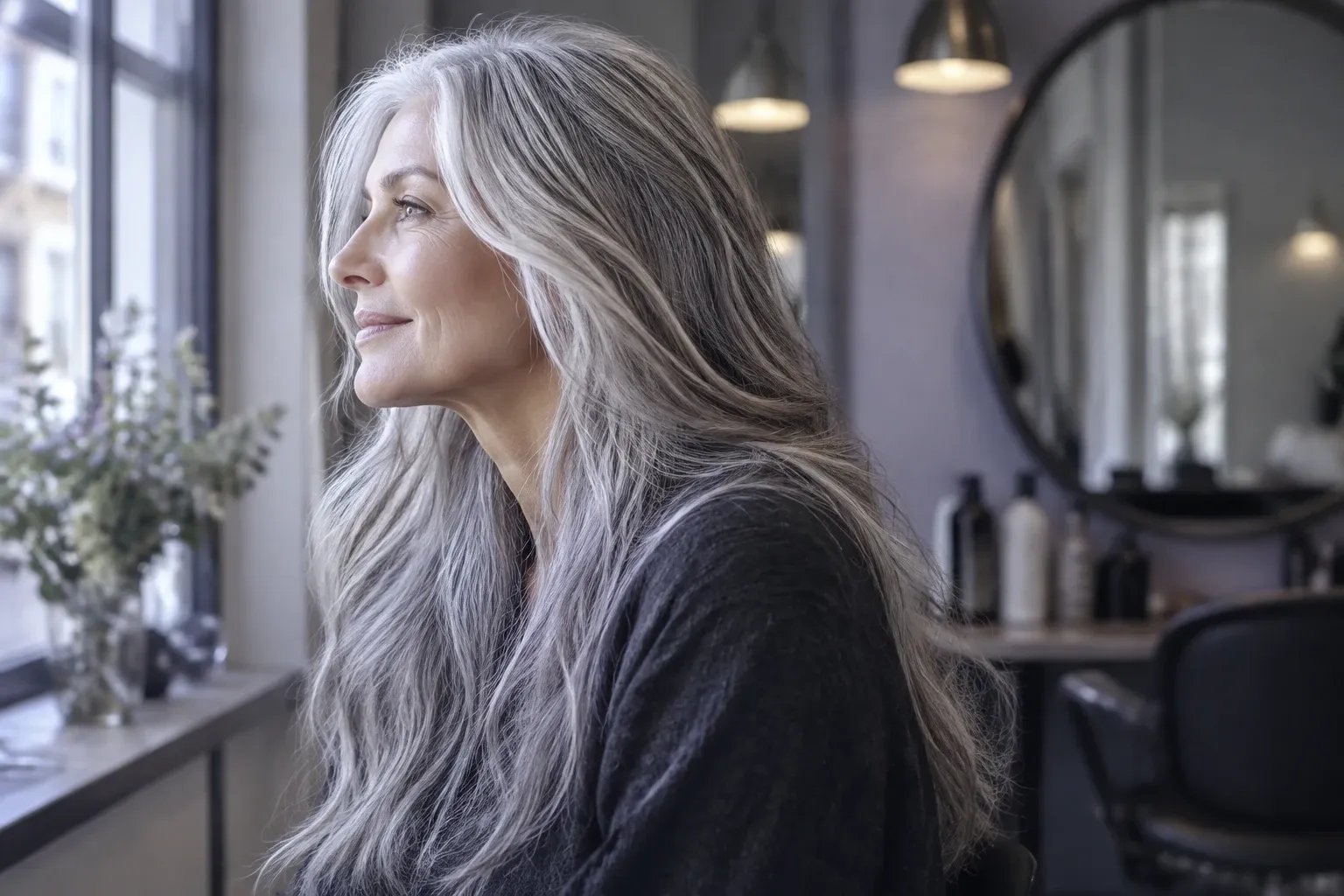
Grey hair isn’t just a marker of time; it’s become a style choice with history behind it. If you’re weighing up letting the silver grow, blending it, or colouring it, you’ll want facts you can trust and steps that fit real life. Below, you’ll find what scientists know about why hair turns grey, how culture around grey shifted, and care and colour options that respect your scalp and your schedule. If you like reading where looks come from, you can also explore our wider collection of where hairstyles come from.
What is actually changing inside a greying hair?
Grey and white strands appear when pigment‑making cells in the follicle stop supplying melanin to the growing hair. Research has tied greying to the loss and mis‑routing of melanocyte stem cells in the follicle’s niche, offering a cellular explanation for why colour fades with age, as summarised by the US National Institutes of Health on a 2023 Nature study and the paper itself (NIH research note; the Nature findings detail how these stem cells become “stuck” and fail to recolour new hairs: Nature 2023).
Scientists have also shown in mice that intense acute stress can trigger greying by depleting these stem cells via sympathetic nerve signalling, a mechanism mapped in Nature 2020. In everyday life, dermatologists point out that family history, underlying conditions and lifestyle all help determine when and how quickly greying shows up (American Academy of Dermatology).
Has culture around grey hair really changed?
Yes. In the UK and beyond, more people now treat silver as a style rather than something to hide. Mainstream fashion coverage tracked this shift through lockdowns and afterwards, noting both older women growing out dye and younger people trying cool‑toned greys (The Guardian on changed hair habits, Oct 2021; see also reporting on the #greyhair and #silvergreyhair waves and high‑profile adopters in Guardian trend coverage, Nov 2022). On how common greying is and how early it starts, a large international survey in the British Journal of Dermatology found wide variation and challenged the old “50/50/50 rule,” which said half of people are 50% grey at 50 (British Journal of Dermatology survey).
If you enjoy the roots of styles and shifts like this, you’ll like our section on where hairstyles come from.
What are your real‑world options with grey hair?
-
Embrace the silver fully. Keep the cut and finish sharp so the colour looks intentional. Grey and light hair are more vulnerable to UV, chlorine and heat damage; dermatologists advise sun protection for scalp and hair, rinsing after swimming, and gentle cleansing (AAD summer hair care).
-
Blend it. Ask for “grey blending” with highlights and lowlights to break up demarcation lines; many colourists use demi‑permanent tones to soften the contrast and permanent light pieces for lift. This is a salon technique rather than a medical claim; approach it as a cosmetic choice and follow safety guidance (AAD colouring tips).
-
Cover it. If full coverage is your preference, permanent oxidative dyes give the most opaque result. Always follow label directions carefully and do the manufacturer’s allergy alert test before use; never dye brows or lashes at home, per the US FDA’s hair dye safety advice. If you’ve ever reacted to dye, speak to a clinician about formal patch testing to confirm allergens (AAD on patch testing).
How do you care for grey hair so it looks its best?
-
Protect tone: Violet‑pigment shampoos can counteract yellowing on white and grey hair; they work by neutralising warm tones and should be used sparingly to avoid a violet cast (Medical News Today on purple shampoo).
-
Mind the sun: Light and grey hair tends to yellow and dull with UV exposure; wear hats and use scalp‑friendly sunscreens on exposed parts as dermatologists recommend.
-
Keep the fibre happy: Grey strands can feel coarser and drier. Use conditioners and heat protection, and reduce hot tool temperatures. If you swim, rinse straight after; chlorine can roughen the cuticle and worsen dryness.
-
If you colour: Follow professional directions and safety steps. People can develop allergies to dye ingredients like PPD; NHS advice explains how reactions can look and when to seek help (NHS on hair‑dye reactions).
How do you put a choice into practice without regret?
-
Trial the look: Before a big grow‑out, try a cooler, ashier gloss or a few silver‑toned highlights to see how softer contrast feels against your skin tone. That way, you ease into less maintenance without a stark line.
-
Plan the transition: If you’re going full silver, book trims every 6–8 weeks. Many people blend for a few months, then switch to a shorter cut once the grey line reaches 3–5 cm to remove old dye in one go. Keep expectations flexible; hair grows roughly 1–1.5 cm a month on average, but the exact rate varies person to person.
-
Patch‑test seriously: An “allergy alert test” on a product is a screening step; if you’ve ever had a reaction, formal medical patch testing is the safer route to identify your specific allergens and alternatives.
-
Mind the era you love: If your taste runs to retro finishes, you might enjoy reading about perm hair or 1980s hairstyles to see how colour and texture trends shaped attitudes to grey.
How do you know it’s working?
-
The mirror test: Does the tone look clean (not yellow), the cut deliberate, and the fibre reflective under daylight? If yes, your routine fits.
-
The scalp test: Any itching, burning or rash after colour means stop and seek advice; the NHS outlines symptoms of dye reactions and what to do next.
-
The evidence test: If you hear a “miracle grey‑reversal” claim, look for peer‑reviewed mechanisms. Current human‑focused evidence ties greying to stem‑cell behaviour and ageing, not a quick fix.
Frequently asked questions
At what age do people usually start going grey?
There’s no single age. Genetics, ethnicity and health all play roles. A large survey in the British Journal of Dermatology found wide variation and challenged the old “50% grey by 50” idea, showing both onset and rate vary by population. See the overview in the journal’s survey revisiting the 50/50/50 rule.
Can stress really make hair go grey faster?
Severe acute stress has been shown to deplete pigment‑forming stem cells in mouse hair follicles, leading to rapid greying in that model. It explains a plausible pathway, though direct proof in humans is harder to run. The mechanism was described in Nature in 2020.
Is purple shampoo good for grey hair?
It can help neutralise yellow tones with violet pigments. It’s a cosmetic effect, not a treatment. Overuse may leave a violet cast or dryness, so use it as needed and follow with conditioner. See Medical News Today’s explainer for how it works and limits.
How do I colour grey hair more safely at home?
Always follow the label and do an allergy alert test first, and avoid dyeing eyebrows or lashes at home. Dermatologists also advise seeing a clinician for true patch testing if you’ve reacted before. See safety guidance from the US FDA and the American Academy of Dermatology.
Why does some grey hair look yellow?
Grey and light hair are more susceptible to UV and environmental damage, which can cause yellowing and dullness. Dermatologists recommend sun protection for hair and scalp and washing after swimming. The American Academy of Dermatology summarises these tips.
Related reading