From big hair to mullets: what really shaped 80s hairstyles
You picture volume, mousse and a can of hairspray. But the 1980s had many distinct looks, born from clubs, catwalks and chemistry. Here’s what defined them and how to approach them now.
If you’re hunting for a true 80s hairstyle, you’re not just copying “big hair”. You’re choosing between club-bred New Romantic shapes, power perms, mullets, crimped texture and glossy Jheri curls—each with its own tools and story. Below, you’ll find what set the decade’s key looks apart, where they came from, and the practical steps and checks to make a faithful, wearable version today. And if you love the backstory of hair, you’ll find more in our section on where hairstyles come from.
What counted as an 80s hairstyle?
In Britain, the decade’s look was fuelled by a two-way flow between London clubs and the catwalk, where bold silhouettes, statement styling and yes—big hair—sat alongside New Romantic polish and punk’s DIY spirit, as shown by the V&A’s exhibition “Club to Catwalk: London Fashion in the 1980s” (V&A). Add in salon chemistry (the perm and curl kits), electrical tools (crimpers), and mass-market aerosols, and you have the building blocks of the era’s hair.
How did the main 80s looks differ?
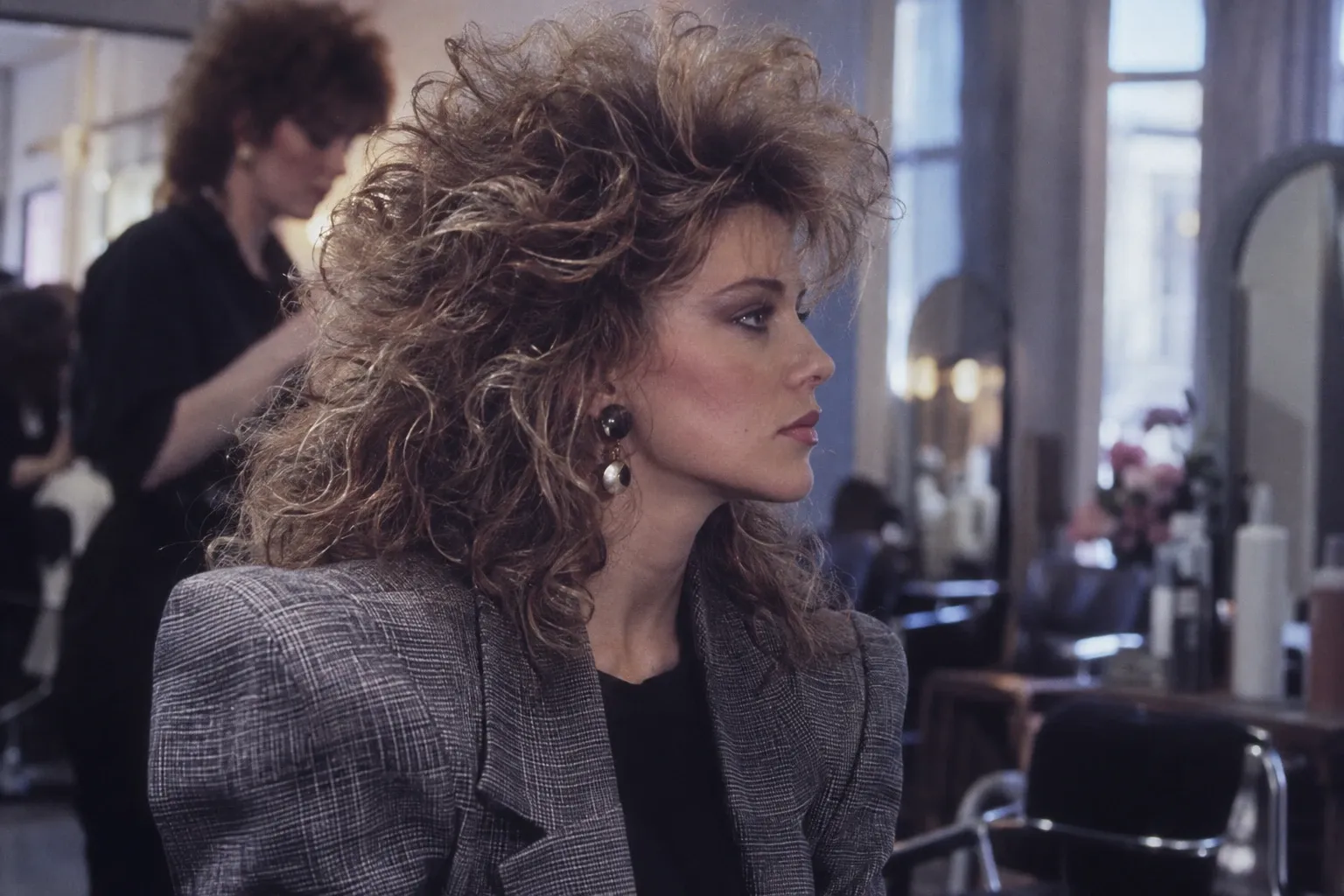
- Big, permed volume: All-over curls and “bigger is better” silhouettes were everywhere in the mid‑80s. Salons used chemical waving and lots of finishing product to build height and width; London fashion’s club influence made the shapes bolder. If you’re curious about chemistry and technique over time, see our piece on perm hair.
- The mullet: Short front and sides with length at the back—worn by pop stars and everyday wearers alike. Its contrasty outline made it a true 80s signature, sitting happily with mousse and spray for lift.
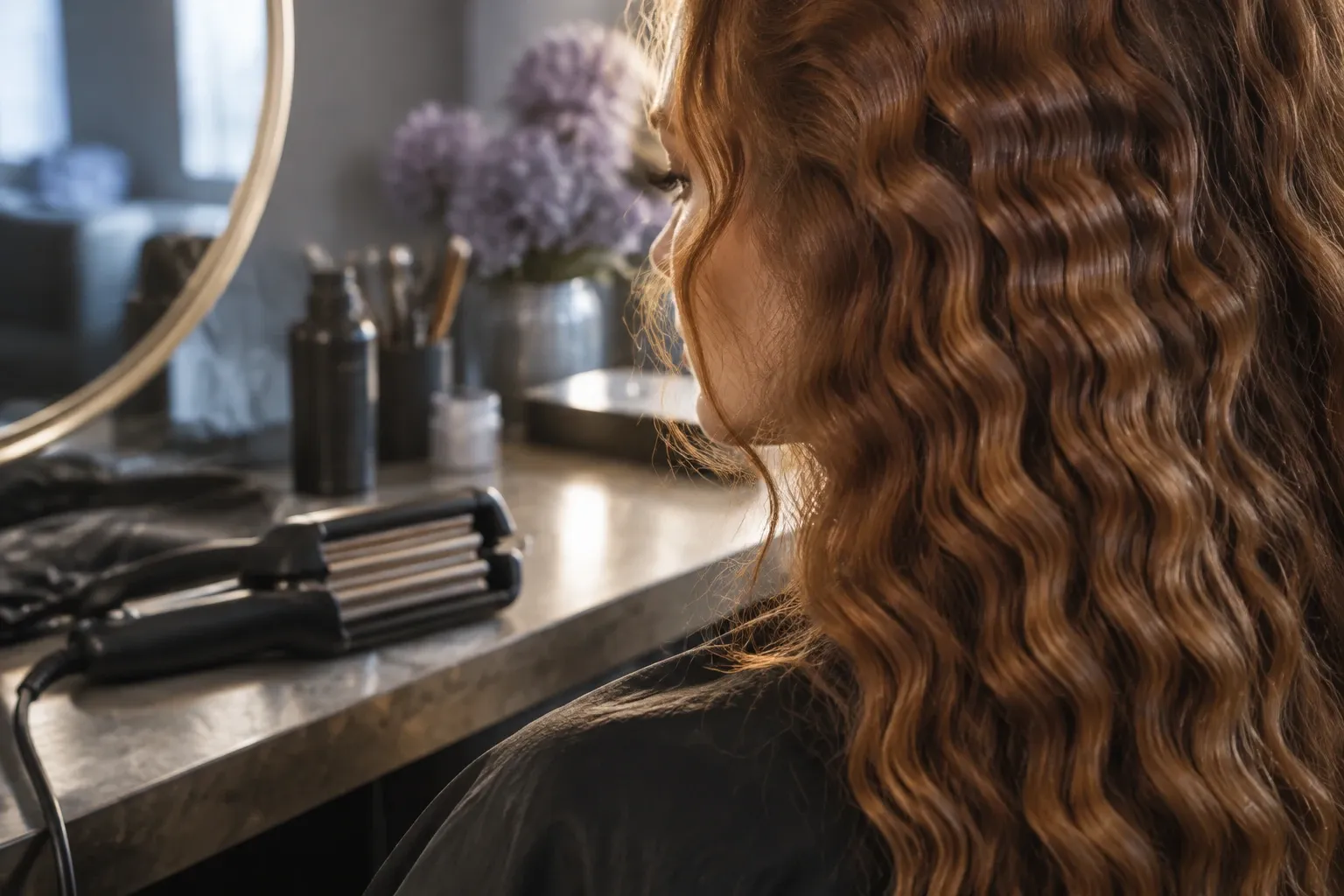
- Crimped texture: A zig‑zag, corrugated finish that added instant bulk. Newspapers covered its late‑80s boom, noting fashion‑house stylists and the brand Sebastian behind the irons (Los Angeles Times). Dive deeper into crimped hair.
- Jheri curl gloss: A chemical curl service that gave soft, loose coils with a wet‑look sheen, popularised for home use by Curly Kit, which helped take the look mainstream (The Washington Post).
Why did hairspray matter so much—and what changed?
The architecture of 80s styles relied on stiff-hold sprays. In the UK, the debate about aerosol propellants became national politics: following the 1987 Montreal Protocol, ministers told Parliament in March 1988 that the government was committed to cutting chlorofluorocarbons (CFCs) and that the British aerosol industry expected to phase out most CFC use within a few years (Hansard). That shift changed what was inside the can, even if the tall silhouettes stayed on heads into the early 90s.
Which 80s style suits your hair and lifestyle?
- Fine, straight hair: Crimped panels hidden under a smooth top add width without a full perm. Keep the crimp small for subtle lift and avoid daily heat on the same sections.
- Wavy hair: A layered cut plus mousse and a diffuser will nod to 80s volume with less upkeep than chemical waving.
- Coily or tight‑curly hair: If you love the Jheri‑curl look, talk to a curl‑specialist about modern, conditioning options that mimic soft, loose coils without the old high‑maintenance activator routine. Otherwise, a shaped, high flat top or defined twist‑out gives 80s energy with today’s products.
- Love a statement cut: A mullet is the fastest route to “instant 80s” on almost any texture; keep the crown cropped and the back graduated so it moves.
How do you recreate an 80s finish—step by step?
- Prep for hold: Shampoo, condition lightly, then work in mousse. Blow‑dry with a round brush for lift at the roots.
- Add structure: Choose your path—hot rollers for rounded volume, a small‑barrel tong for defined curls, or a crimping iron in hidden layers for body. Newspapers at the time warned that over‑crimping can weaken hair, so keep passes brief and protect with heat spray.
- Set the silhouette: Mist hairspray in short bursts from 20–30 cm, shaping with your fingers rather than freezing everything solid; modern propellants replaced most CFCs as UK policy and industry shifted after 1987.
- Detail: Tease only where you want height and smooth the surface with the flat of your comb.
How can you tell you’ve nailed the look?
- Silhouette: From face‑framing curls to a squared‑off mullet outline, the shape should read from across the room.
- Texture: You should see deliberate texture—defined curls, corrugations from crimping, or a glossy coil pattern.
- Balance: The crown carries height without collapsing at the sides; the nape length (for mullets) moves rather than clumps.
- Wearability test: Shake, then tap in a last veil of spray. If the shape survives a jacket on/off, you’ve hit the sweet spot.
Want more of the story?
The 80s looks above sit in a longer thread of style and subculture. For the wider picture of clubs, catwalks and street style that fed those heads of hair, start with our Stories hub on where the hairstyles we wear come from.
Related reading