Braids across time: origins, meanings and making
You wear braids for style, for ease, for culture, or all three. Here’s where braiding comes from, what it signified in different places, and how techniques travelled.
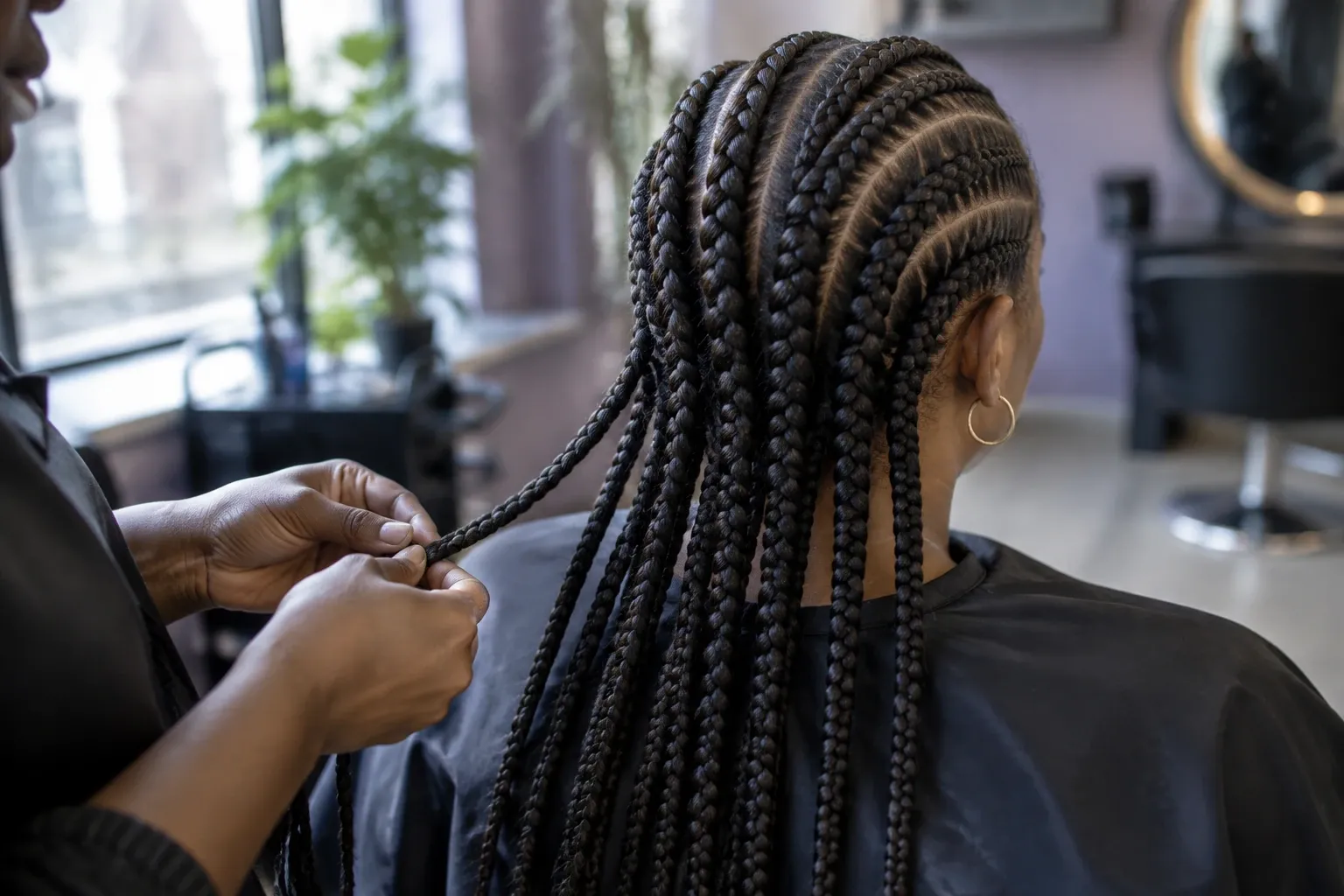
Search for a new braid and you’ll meet names from everywhere—cornrows, Fulani braids, fishtails, halo plaits—plus claims about where they started. If you care about your hair and the story it tells, it helps to know which traditions you’re drawing on. This piece traces verifiable moments in the history of braiding and shows you what to look for when a style says it’s “ancient” or “traditional”, so you can choose—and credit—well.
What counts as a braid, and what did it once say about you?
A braid interlaces strands to create length, texture or structure. In many African societies, braiding has long communicated social facts—age, marital status, wealth, religion or rank—rather than acting as decoration alone, as reported by the Smithsonian Center for Folklife and Cultural Heritage.
Across time, hair could also be extended or protected by braiding separate fibres into it. In ancient Egypt, curators describe wigs built from masses of hair with hundreds of thin plaits; false braids are attested as early as the Predynastic Period, according to the British Museum’s catalogue note on a plaited wig.
A short timeline you can verify
- Ancient Egypt: objects and tomb finds include bundles of plaited hair and hair‑linen braids, showing that plaits could be made separately and added to natural hair. See the Metropolitan Museum’s “Braid of Hair and Linen” from Thebes and the British Museum’s plaited wig.
- West and Central Africa: braids have long carried cultural meaning. The Smithsonian Folklife program cites Wolof, Mende and Yoruba practices in which patterns signalled identity. Contemporary Nigerian work documented by National Geographic shows these traditions’ pride and continuity.
- Imperial Rome (1st century AD): portraits allow tight dating of court fashions; one Met portrait notes a halo of curls with tight braids tied at the nape, similar to Empress Domitia Longina in the early 80s AD, according to the Met’s object record. Roman stylists also used needle and thread to fix braids, as explained by the Kelsey Museum of Archaeology.
How styles differ: structure, placement and meaning
- Scalp-attached vs free-hanging: Cornrow‑type braids sit flush to the scalp in geometric rows; free plaits or rope braids hang from their base. Museum wigs from Egypt show both approaches together—fine plaits hanging from a structured base—per the British Museum.
- Signals vs fashion: In African settings described by the Smithsonian Folklife program, patterns could announce social facts; at Roman court, changing braided arrangements tracked elite fashion cycles, visible on dated portraits at the Met.
- Tools and making: Some traditions build volume with added hair; Romans sometimes secured complex braided constructions by sewing through the hair, notes the Kelsey Museum.
If you want to borrow a braid, here’s how to credit it
- Name the source tradition where it’s clear: “Yoruba‑inspired parting with Fulani side braids,” or “Roman nape‑braid bun.” The Smithsonian Folklife article is a good primer on how meaning travels with styles.
- Avoid flattening specifics: A museum‑documented Roman nape braid is not the same as a West African cornrow map; treat labels as precise, not interchangeable.
- Choose accessories that fit the story: A simple circlet or pin suits a Roman‑style braided bun (see the dated Met portrait), while beaded accents belong with many Sahelian and Sahel‑influenced looks spotlighted by National Geographic.
Sense‑check your result
- Does the structure match the claim? If you’re invoking an Egyptian precedent, look for fine, numerous plaits and added hair, as in the British Museum wig. If you’re citing Rome, a braided element tied at the nape or sewn into an updo appears on dated pieces at the Met and in the Kelsey Museum.
- Are you acknowledging the culture? When you post or teach a look, include the tradition you drew from and what that element meant in context, using background like the Smithsonian Folklife primer.
For more origin stories, browse where today’s hairstyles come from.
Frequently asked questions
What’s the oldest clear evidence of braided hair?
Museum collections in Egypt preserve wigs and hair pieces with hundreds of fine plaits from before the pharaohs. The British Museum describes a wig with thin plaits and notes that false braids are known from the Predynastic Period. Roman portraits also show dated braided styles from the 80s AD at the latest, as seen at the Met.
Did braids communicate identity in Africa?
Yes. In societies including the Wolof, Mende and Yoruba, braids could signal age, marital status, wealth, religion or social standing, according to the Smithsonian Center for Folklife and Cultural Heritage. Nigerian photographic projects documented by National Geographic also frame hairstyles as cultural pride.
How were elaborate Roman braids held up?
Roman household stylists—called ornatrices—used tools such as curling irons, bodkins and even needle-and-thread to secure braids into place, according to the Kelsey Museum of Archaeology. Dated portraits at the Met show braided elements tied at the nape.
Is it OK to mix techniques from different traditions?
It’s your choice, but credit matters. If a style draws on named traditions (for example, Fulani-inspired braids or a Roman-style braided bun), say so. Aim for respectful blending rather than presenting a cultural technique as a generic trend.
Related reading