How crimped hair went from backstage trick to 80s icon
You’ve seen the zig‑zag texture in old photos and on runways. Here’s where crimped hair really came from, why it boomed in the 1980s, and how to recreate it safely.
If you search for crimped hair you’ll find two things: a very specific, saw‑toothed texture and a lot of nostalgia. This story traces the texture’s real path—from early heat tools to a 1970s backstage invention and the 1980s boom—then shows you practical ways to wear it now without wrecking your hair. You’ll also find simple checks so you know when the look is working for your length and texture.
Where did the zig‑zag texture begin?
Before the 20th century, people already used heated irons to press patterns into hair and clothing; museums still hold examples like a purpose‑built hair crimping iron with wavy plates, preserved by the Smithsonian’s National Museum of American History (crimping iron artifact). The modern, portable crimping iron that fixed the sharp, saw‑tooth look is credited to Los Angeles hairdresser Geri Cusenza, who developed it in the early 1970s while styling Barbra Streisand—an origin story reported contemporaneously by the Los Angeles Times (LA Times profile). The texture then became a pop‑culture staple in the 1980s, resurfacing regularly in fashion cycles (Allure on the 80s trend). For more origin tales of styles like this, explore our Stories section.
What counts as “crimped” versus waved or braided?
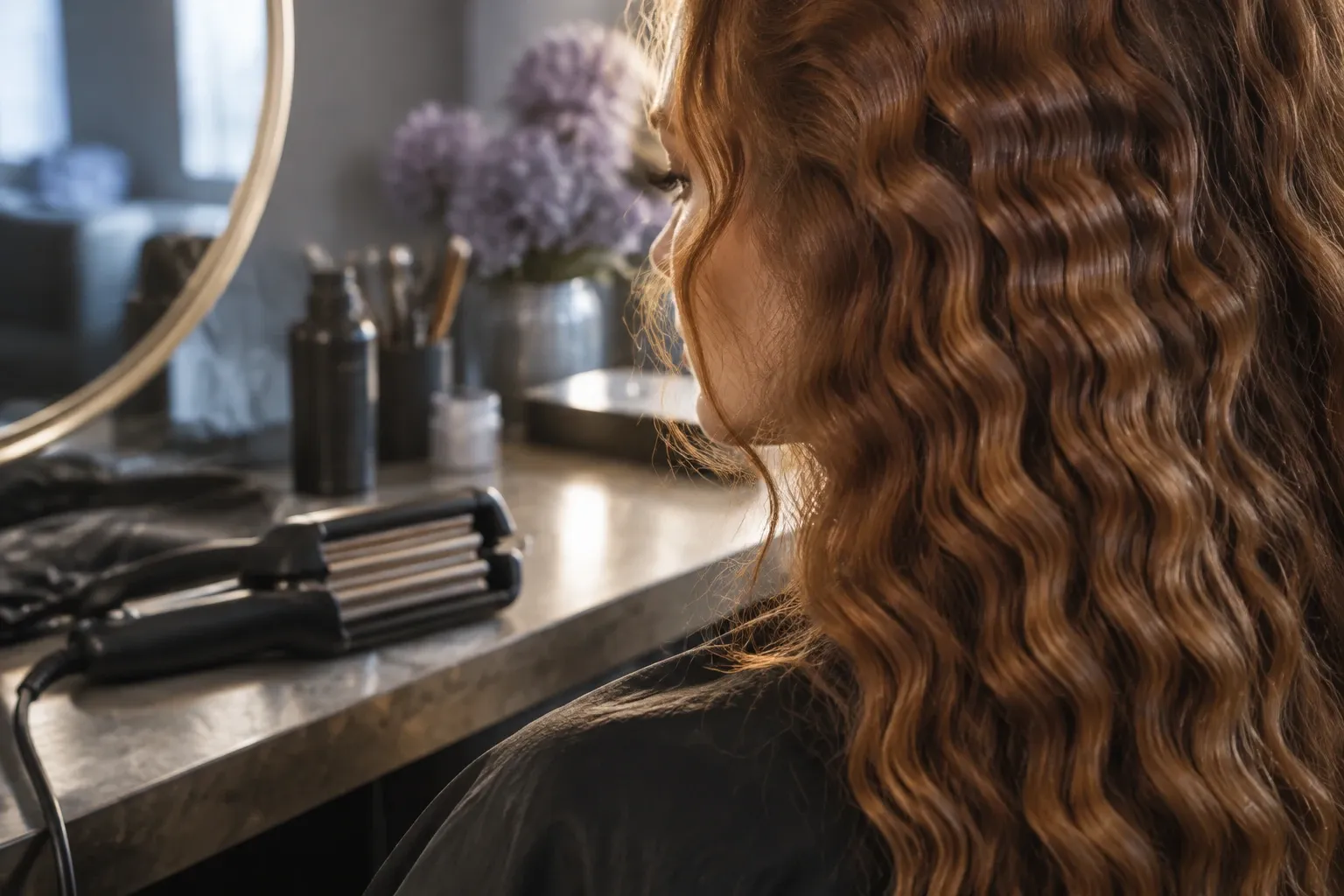
Crimped hair shows a repeating, angular zig‑zag made by ridged plates closing and reopening along a section. A waved style forms curves, not angles. Braid‑outs (unravelling many small plaits after drying) make a broken‑wave texture that can pass for a looser crimp, especially in thicker sections. The difference shows most clearly near the roots: a true crimper can place the pattern close to the scalp, while braids start a little lower.
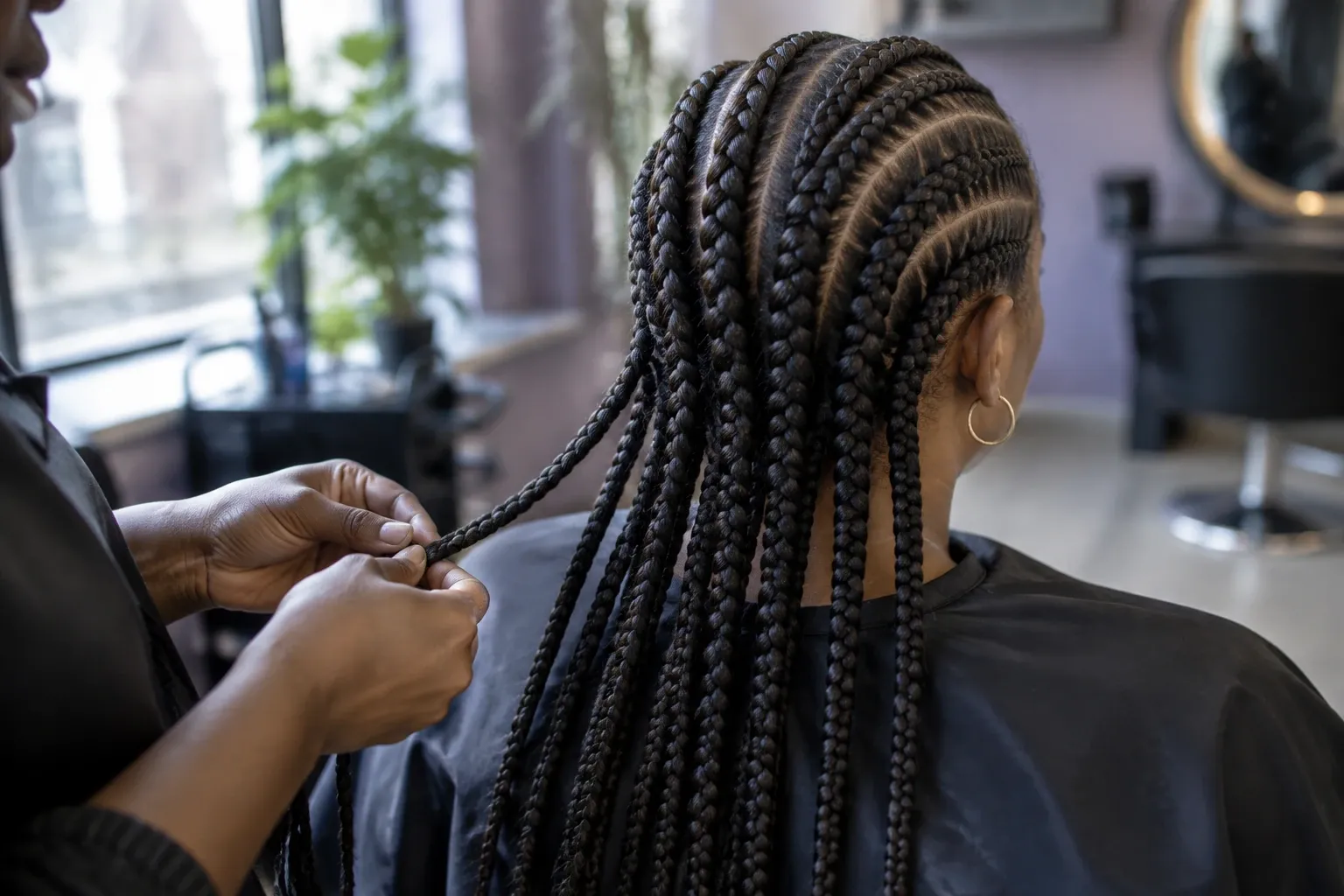
If heatless texture appeals, read up on the history of braiding and use plait patterns to tailor the effect—more, thinner plaits for a tighter look; fewer, larger for a softer one.
Your options to get the look today
- Heat crimpers: quickest and most uniform. Choose narrow plates for short hair or fine sections; wider plates for long, dense hair. Dermatologists advise using hot tools on dry hair at the lowest setting that works, and applying a heat‑protective product first (AAD tips).
- Braid‑set: wash, condition, detangle; apply a lightweight mousse; plait in small, even sections; let dry fully; unbraid and mist with a flexible hairspray. This is slower but avoids direct heat.
- Crimping plates for straighteners: some flat irons accept interchangeable zig‑zag plates. Use sparingly near edges to avoid visible plate marks.
A simple, safe crimp at home
- Wash, condition and detangle thoroughly. Dry hair completely if you’re using heat.
- Apply a heat‑protective product; set your tool to low or medium heat as dermatologists recommend for damage reduction (AAD guidance).
- Part the hair horizontally into thin, even sections. Clip the rest away.
- Starting a finger‑width from the scalp, close the plates for one second, open, then move down so the teeth meet the last ridge. Repeat to the ends without rushing.
- Let each section cool untouched, then lightly comb with fingers. Finish with a fine mist of flexible‑hold spray.
How to know it’s working (and when to stop)
- Pattern check: the zig‑zags should line up like bricks. If you see gaps or stretched patches, your sections are too large or you’re pulling while crimping.
- Touch test: the hair should feel pliable, not crispy. If it feels dry or smells scorched, lower the heat and slow down between clamps—overheating causes cuticle damage, as dermatologists caution with all hot tools.
- Balance: full‑head crimping reads very 1980s; crimping only the mid‑lengths, a few panels under the top layer, or one accent section blends the texture into a modern shape.
Crimped hair has always been a conversation between tool and texture—from early irons in museum collections to a 1970s backstage prototype and the pop boom that followed (Smithsonian; LA Times; Allure). With thoughtful prep and gentle technique, you can wear its angles in a way that suits you today.
Frequently asked questions
Is crimping bad for your hair?
Any high heat can damage hair. Dermatologists advise using the lowest effective setting, working on dry hair, and limiting hot tools to reduce breakage; they also recommend heat‑protective products before styling, according to the American Academy of Dermatology (<a href="https://www.aad.org/public/diseases/hair-loss/hair-care/styling/" target="_blank" rel="nofollow noopener">AAD guidance</a>).
What’s the difference between crimped and waved hair?
Crimping makes a tight, zig‑zag imprint using ridged plates; waves form an S‑shape, whether set with a three‑barrel waver or a classic Marcel iron. Braid‑outs can mimic a looser crimp, but the pattern is usually broader and less uniform.
Can crimping work on short or very long hair?
Yes, but adapt the tool and section size. Short cuts benefit from narrow plates and smaller sections for control. Long hair needs very even, horizontal sections and light tension so the pattern lines up from root to ends without stretching out.
Related reading