Choose hair slides that hold and don’t snag
You want a tidy hold that doesn’t break hairs or irritate your scalp. Here’s how to choose and place hair slides and clips so they stay put without harm.
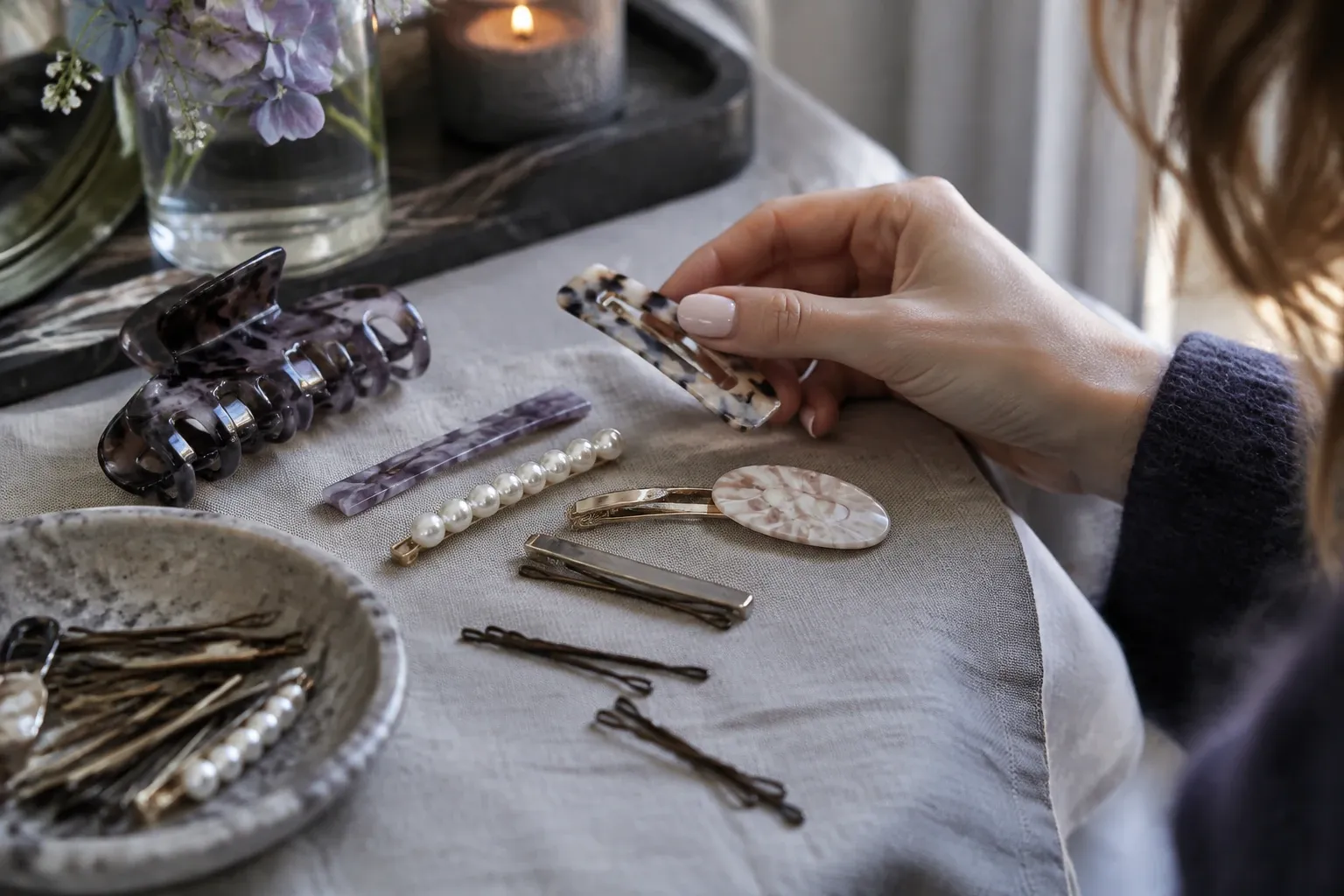
If your slides slip out, tug at your roots or leave a sore spot behind your ear, the problem is rarely your hair—it’s the wrong clip for the job or the way it’s placed. Below you’ll find the practical criteria that matter (size, grip, finish and material), a quick comparison of common slide and clip shapes, and simple ways to section and secure hair so the hold lasts without pulling. We’ll also point out when a reaction is more than a comfort issue and needs a change of material or a check with a clinician.
What makes a slide comfortable and secure?
- Tension, not pain: accessories should feel secure but never tight or sore. Persistent pulling can lead to traction alopecia, so avoid styles that hold by constant tension according to NHS dermatology advice and guidance from the American Academy of Dermatology.
- Smooth finish: seams, burrs or sharp teeth snag and cut strands. Prefer slides with polished edges; run them along a ribbon—if they catch fabric, they’ll catch hair.
- Right size for the section: the clip should close fully without forcing; if it gapes, size up or take a smaller section.
- Material matters for skin: if you develop itching or a rash where a clip touches skin, metals like nickel can be a trigger; the British Association of Dermatologists lists nickel and cobalt among common causes of allergic contact dermatitis in its patient guidance.
You’ll find an overview of other accessories in our section guide to hair accessories worth buying.
Which slide or clip suits your hair and task?
| Type | Best for | Why it works | Watch‑outs |
|---|---|---|---|
| Hair grips (“kirby”/bobby pins) | Fine to medium hair; pinning fringes and loose bits | Wavy side grips add friction so short hairs stay put | Avoid forcing into thick sections; place with the wavy side against the scalp for grip, smooth side out |
| Snap clips | Fine hair; children’s hair; part‑hold accents | Flat profile, even pressure on small sections | Check edges are smooth; use only on dry or nearly dry hair to avoid imprint marks as wet hair breaks more easily when handled |
| Barrettes/slides with clasp | Medium to thick hair; half‑up styles | Distributes tension across a wider bar | Choose the correct bar length; if hair bulges, take a thinner section |
| Claw clips | Medium to very thick or curly hair; quick updos | Teeth share the load across a large bundle so less localised pull | Opt for large, smooth teeth; avoid forcing closed—re‑section instead |
| Alligator/croc clips (sectioning) | Any hair during styling | Strong spring holds sections while you work | Not for day‑long wear; can leave dents if too tight—release and reposition |
Note: If metal slides irritate your skin, switch to plastic, cellulose acetate or labelled nickel‑free options, and seek patch testing if reactions persist as BAD advises.
How to place slides so they stay put without pulling
- Start with texture where you need hold. Lightly mist hairspray or add dry shampoo to silky roots. Handle wet hair gently—wet strands are more fragile and break more easily when combed or clipped per AAD guidance and NHS dermatology advice.
- Take the right amount of hair. For a small slide, work with a pencil‑thick section; for claws, fold hair loosely and let the teeth share the load.
- Angle for grip, not tension. Insert grips against the direction of growth and lock by crossing two in an X if needed. With barrettes, close them where hair lies naturally rather than yanking tight to the scalp.
- Spread pressure. For updos, use several medium slides rather than one oversized clip in the same spot every day to avoid repeated pull on the same follicles as NHS advice notes.
If you add volume or length for a style, choose secure yet gentle anchors. For example, sectioning clips are invaluable when fitting clip‑in hair extensions, and a large claw is handy for holding hair out of the way when positioning a halo wire halo extension.
A quick routine: from parting to pinning
- Half‑up on fine hair: create a shallow triangle section at the crown, spritz lightly, place a small barrette that closes without forcing, then add two hidden grips underneath in an X for insurance.
- Curly up‑twist: gather curls loosely, twist once to align, and secure with a large, smooth‑tooth claw. If any area feels tight, release and re‑clip a little lower.
- Fringe grow‑out: sweep to the side and anchor with two opposing mini‑grips placed like arrowheads. Add a tiny drop of texture spray if hair is very silky.
Safety and comfort checks before you head out
- Press test: if a clip leaves a dent that feels sore, change to a larger clip or take a smaller section.
- Skin check: redness or itching where a slide touches skin can signal contact dermatitis—switch materials and consider patch testing if it recurs per BAD.
- Tension audit at day’s end: if removal stings or you notice short broken hairs at the same site, rotate your style and avoid tight, repetitive placement to protect against traction‑related loss as dermatologists advise and NHS guidance confirms.
Frequently asked questions
Can hair slides cause hair loss?
Any accessory that pulls on the same hairs day after day can contribute to traction alopecia. Dermatology guidance advises avoiding tight, repetitive tension and handling wet hair gently to reduce breakage.
What if a metal slide makes my skin itch?
You may be reacting to metals such as nickel. The British Association of Dermatologists notes metals in jewellery, including nickel and cobalt, can trigger allergic contact dermatitis; switching to nickel‑free or plastic slides often helps.
Are claw clips gentler than elastics?
Large, smooth‑edged claws can spread tension over more hair, which many find more comfortable than tight elastics. Still avoid styles that feel tight or painful and vary placement to protect the same follicles.
How do I keep fine hair clips from sliding out?
Prep the section with a little texture (dry shampoo or a light mist of hairspray) and use small, ridged slides placed against the direction of growth. Cross two grips in an X for extra hold without extra tension.
Related reading
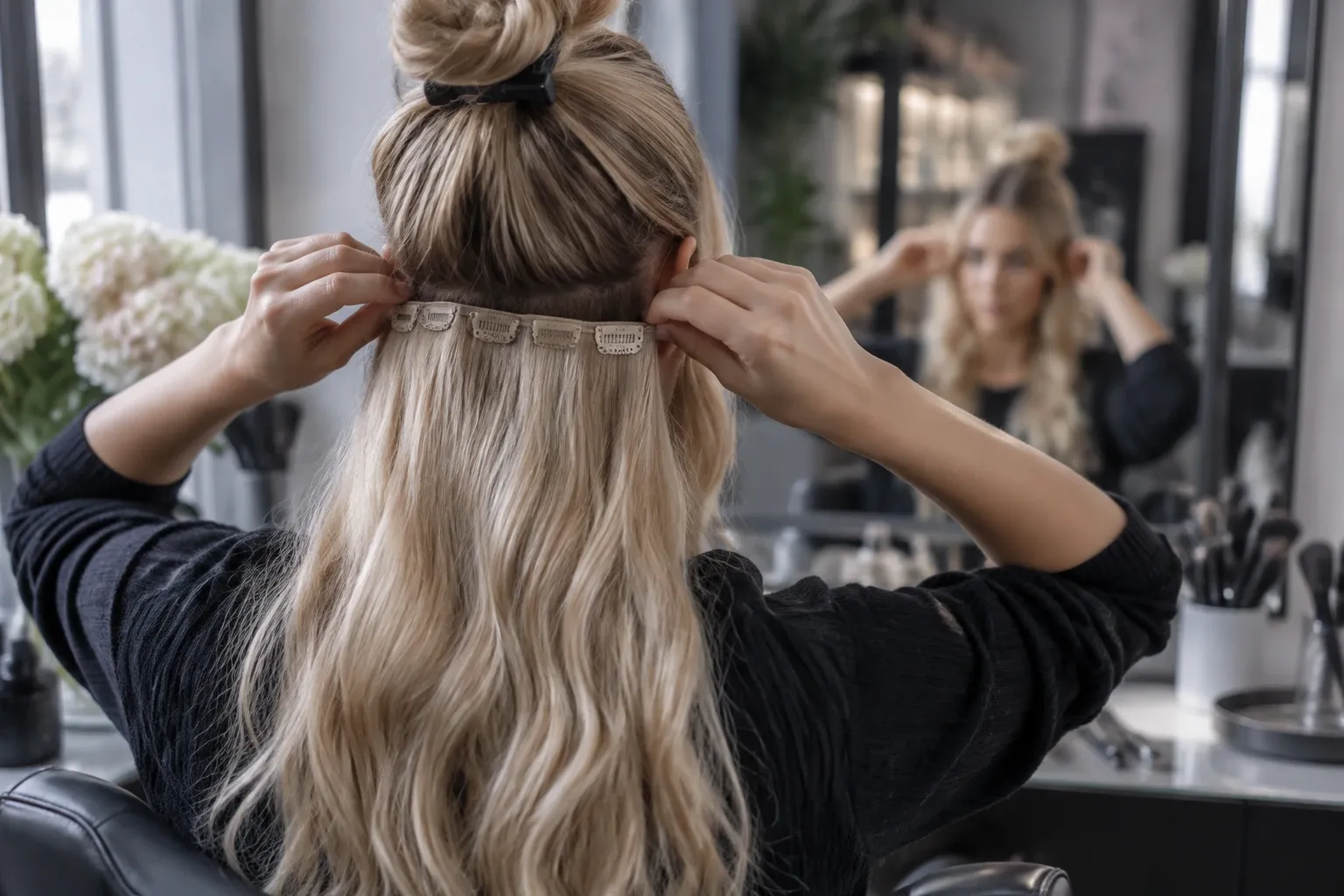
What clip‑in hair extensions can do for your hair, and how to use them well
Read more →