What clip‑in hair extensions can do for your hair, and how to use them well
You want instant length or volume you can take out at night. Clip‑ins promise both, but only if you pick the right set and fit them with care. Here’s how to choose well, apply them securely and protect your own hair.
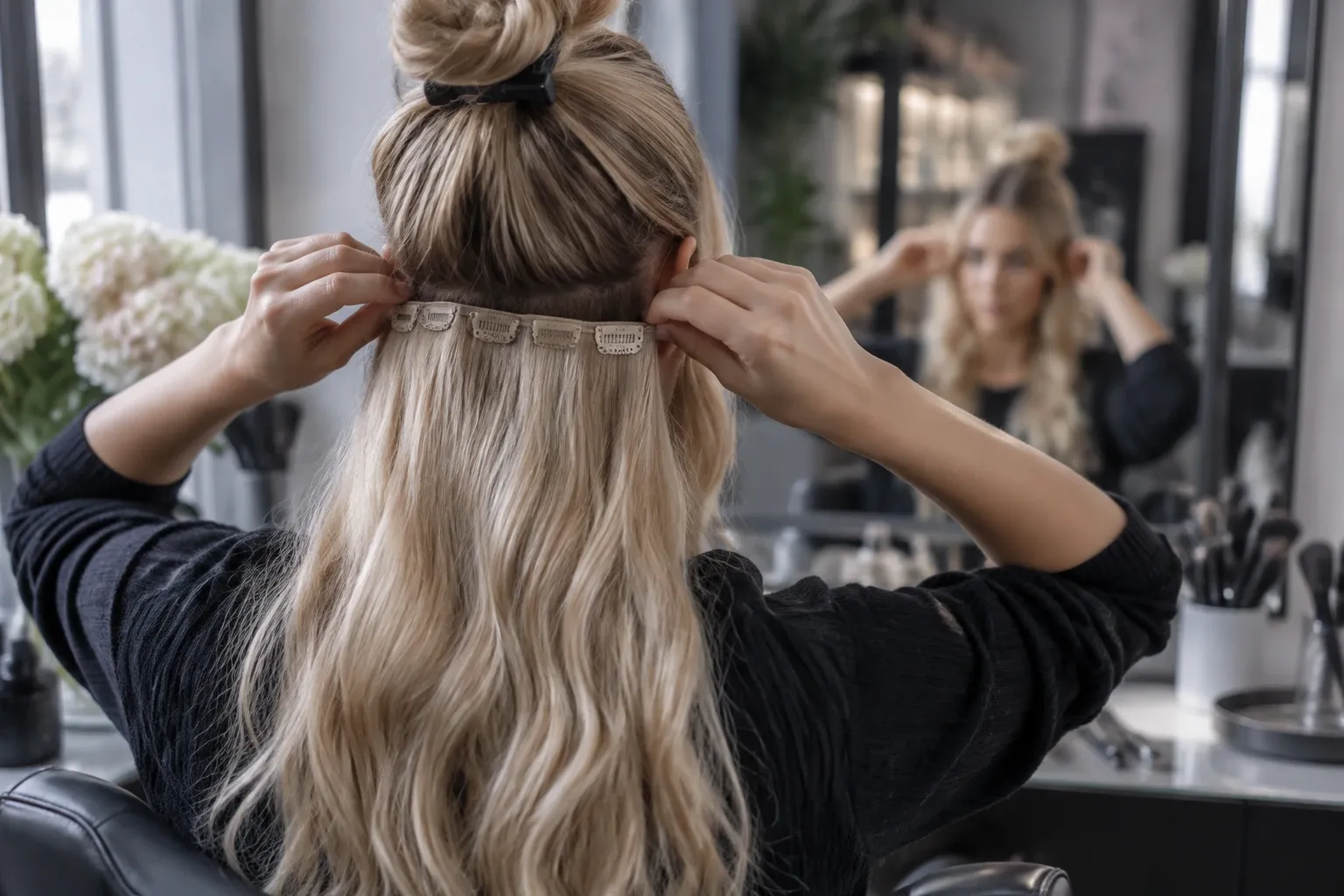
If you’re weighing up clip‑in hair extensions, you’re likely after a quick switch‑up without the salon commitment. The catch is that weight and tension matter: choose poorly or wear them the wrong way and your scalp will tell you. Below you’ll find practical criteria for buying, the differences between common options, a step‑by‑step to put them in, and what to look for once they’re on. Where there are risks or limits, we point to dermatology and trichology guidance.
Who are clip‑ins really for?
Clip‑ins suit you if you want temporary length or volume you can remove before bed, showers and the gym. Removability matters because prolonged pulling on follicles is the known driver of traction alopecia, a pattern of hair loss linked to tight or heavy styling, according to the British Association of Dermatologists. The Trichological Society adds that clip‑in/out units are the safer extension option precisely because they come out for sleep, cutting overnight tension on roots (The Trichological Society).
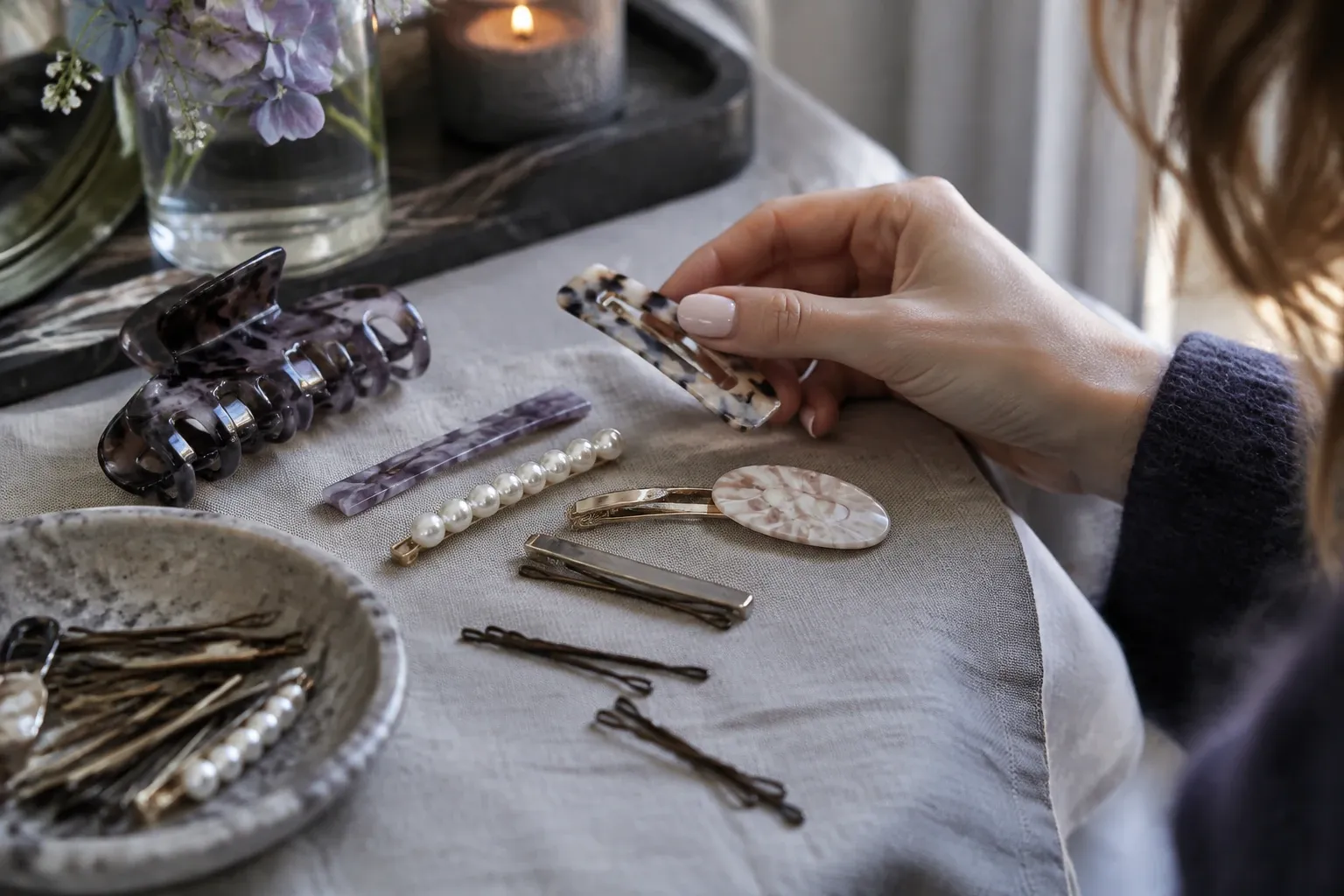
If you’re still exploring which accessories are worth it for your hair type, start with our overview of hair accessories that are worth buying.
What should you check before you buy?
- Hair fibre and finish: Human hair can be heat‑styled much like your own. Synthetic can look great but only heat‑style it if the fibre is clearly labelled as heat‑friendly by the maker; when in doubt, skip the heat.
- Weight versus your hair density: Heavier sets add more strain. Dermatology guidance links sustained traction to hair loss, so if your hair is fine or shedding, prioritise lighter pieces and fewer wefts.
- Weft construction: Multi‑weft (or “double‑weft”) pieces pack more hair into fewer clips, which can feel heavier per section. Single‑weft pieces spread weight more thinly but you may need more of them.
- Clip quality and backing: Small, silicone‑lined clips cushion the grip and reduce slip. Look for sturdy stitching so weight is distributed along the seam.
- Colour match and texture: Match undertone rather than just “dark” or “light”. If your hair has a wave pattern or coils, pick a texture that blends so you’re not forced to over‑style daily.
- Care instructions and hygiene: Reputable brands publish clear care rules and hygiene seals. Many manufacturers state clip‑ins are for occasional, daytime wear and must be removed for sleep and swimming (Cliphair care instructions).
Clip‑ins versus other quick‑change options
- Clip‑ins: Attach with small pressure clips along your partings. Best for occasional wear and for trying length/volume without commitment. Remove nightly to protect follicles.
- Halo extensions: A single weft on a thin wire that sits around your head; because it rests on your head rather than clipping to many strands, it reduces pulling on roots. If you’re curious, read our take on halo hair extensions.
- Semi‑permanent methods (tape, bonds, wefts): These stay in for weeks and can look seamless, but they add continuous weight. Continuous traction is a known risk factor for hair loss, especially if the style is tight or heavy, as noted by the British Association of Dermatologists.
How to fit clip‑ins so they feel secure without strain
-
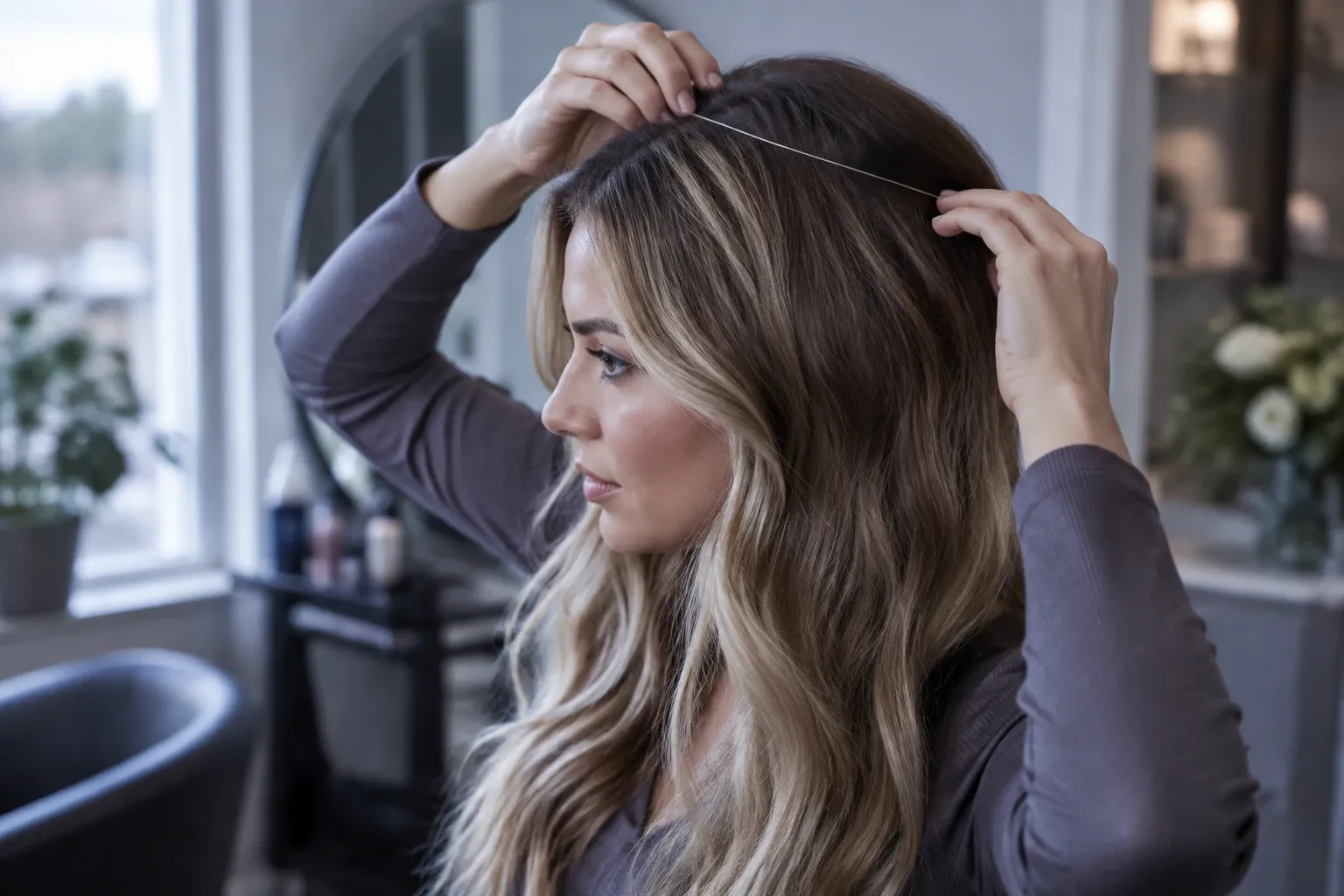
Start with fully dry, tangle‑free hair. Lightly texturise roots where clips will sit so they grip. Many pro guides suggest a gentle backcomb for grip on very silky hair (Perfect Locks installation tips).
-
Plan your map. Keep pieces away from your hairline and the very top of your head to hide clips. Use wider wefts low at the back where hair is denser; shorter wefts at the sides.
-
Clip with care. Open each clip, place it flat against the teased root, then snap closed. If you feel pinching, reopen and shift to a new spot—pain is a red flag, not a sign of “security”.
-
Balance the load. Space pieces out and avoid stacking too many wefts in one area. Rotate placement day to day to avoid repeated stress on the same follicles.
-
Blend and style. Curl or smooth together with your own hair if the fibre allows. If you heat‑style, protect both hair and extensions and keep the tool moving.
Care rules that protect your scalp and your set
- Remove before bed, swimming or heavy workouts. This is a common manufacturer rule and helps avoid constant traction and tangling.
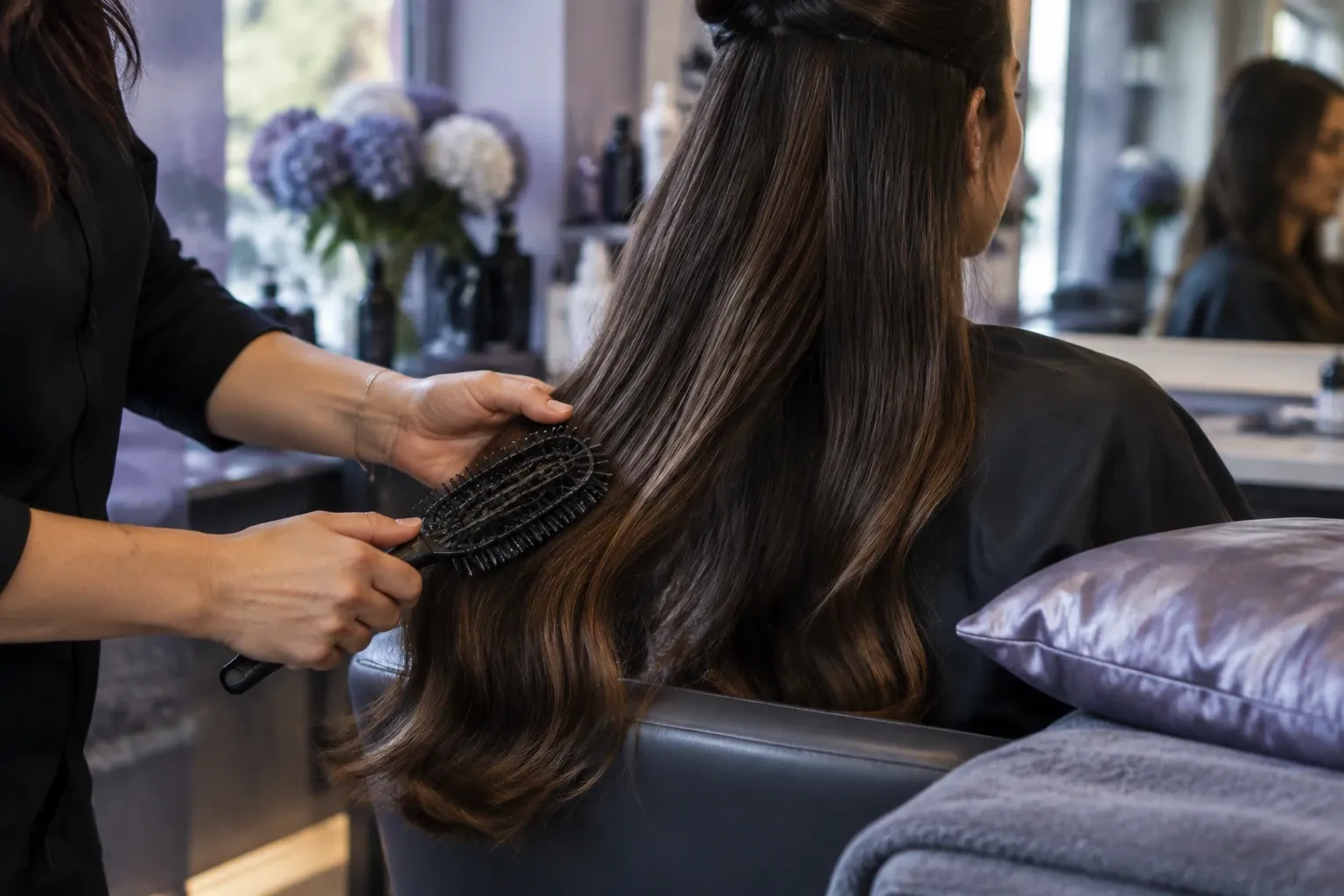
- Detangle gently from ends to roots while the pieces are off your head. Store them flat.
- Wash sparingly. Off‑head washes with gentle shampoo and cool water keep the clips and stitching intact; over‑washing dries fibres.
- Keep products light near the roots so clips can grip next time.
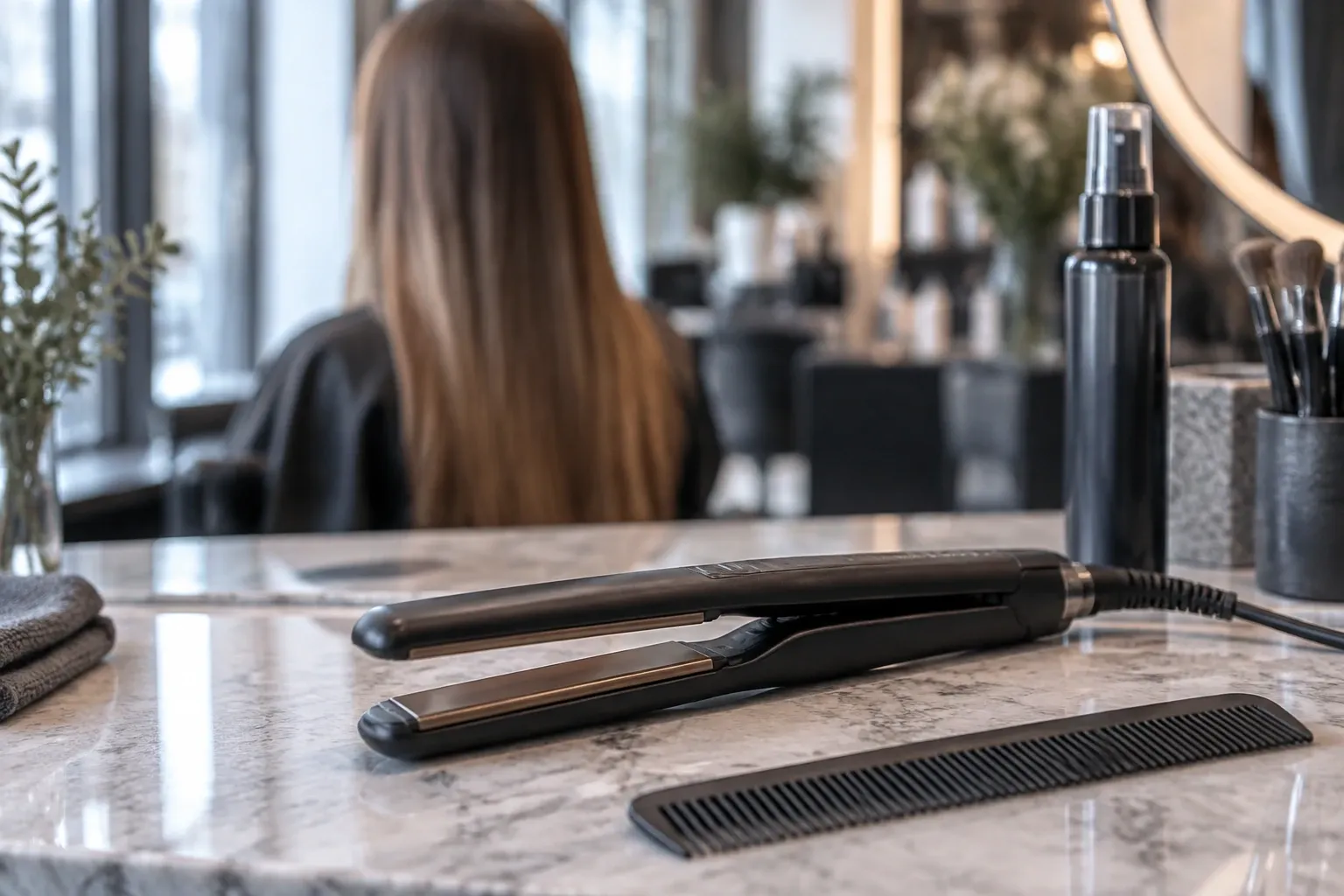
If you routinely straighten before wearing clip‑ins, choose tools that treat hair kindly; our guide to the best hair straighteners in the UK explains temperature control and plate materials.
How do you know the fit is right?
Check your scalp and the feel after an hour and again at the end of the day. Any scalp soreness, redness, or small bumps where clips sat means too much tension—remove them and refit in different spots. Persistent tight styles and added weight are the key risk factors for traction alopecia, so comfort is your safety cue (British Association of Dermatologists; see also Alopecia UK’s overview). Rotate placement, scale back the number of wefts, and give your scalp regular no‑extension days.
When in doubt—especially if you already notice thinning—speak to a GP or consult a trichologist. Early changes like tenderness or broken hairs along partings are a sign to ease off and reassess.
Related reading