Pick a hair extension course that actually gets you insured and working
You’ve decided to learn extensions, but the course menus are dizzying. Here’s how UK training and insurance really work, and how to pick a course you can use in practice.
If you’re weighing up hair extension training, you’re probably seeing everything from one‑day workshops to regulated qualifications, all promising fast results. The key is to choose training you can actually use with clients: something that meets UK expectations for quality, that your insurer will accept, and that teaches methods you plan to offer. Below, you’ll find plain criteria to compare courses, the main options you’ll see, and a simple checklist to put your choice into practice.
Do you need a specific qualification to fit hair extensions in the UK?
There’s no statutory licence to work as a hairdresser or extensions specialist in the UK. The sector is not legally regulated, and there’s no law that says you must hold a particular qualification to offer services, although you must still meet general consumer and safety laws, according to the House of Commons Library’s overview of hairdressing regulation. House of Commons Library.
So what counts when you book a course?
Two things tend to determine whether your training is useful in practice:
- Whether the qualification itself is regulated (listed on the national Register of Regulated Qualifications run by the exams regulator for England and Northern Ireland). You can search the register by title or subject to check. Ofqual Register.
- Whether your insurer will accept the course for cover. Some insurers set explicit rules for extensions – for example, one policy wording states that “in respect of hair extensions you must hold a full hairdressing qualification in addition to the relevant method,” and that online‑only training is not accepted. This is an insurer’s requirement, not law, but it matters for your ability to trade. Professional Beauty Direct policy wording.
What are your main course options?
- Regulated qualifications (RQF): Typically delivered by colleges or approved centres and assessed against national standards. As a concrete example in hair, VTCT lists a Level 3 NVQ Award in Creative Hair Extension Services (qualification code 600/4195/X). An awarding body listing is not, by itself, proof of insurance acceptance, but it shows the qualification exists and can be checked on the register. VTCT qualifications list; see also the Ofqual Register.
- Private brand or academy courses: Often shorter and focused on one method (for example, tape‑in, micro‑ring, nano‑ring, or bonded). Quality varies; some providers align to recognised standards and include supervised practice, while others are purely demonstration‑based. Acceptance for insurance is provider‑specific – always check in advance with your insurer using the exact course title and provider name. For a broader view on choosing training types and study routes, see our guide to how to choose a hairdressing or beauty course.
How to compare course content before you pay
Use the same lens for any provider:
- Methods taught: Match the course to what you plan to offer (e.g., tapes and nanos for fine hair; wefts for speed on longer, denser hair). If you’re upskilling from cutting/colour, check there’s dedicated content on sectioning, weight distribution and safe tension for extensions.
- Consultation and colour‑matching: You need structured training on suitability checks (natural density, scalp condition, lifestyle), colour blending, and ordering hair.
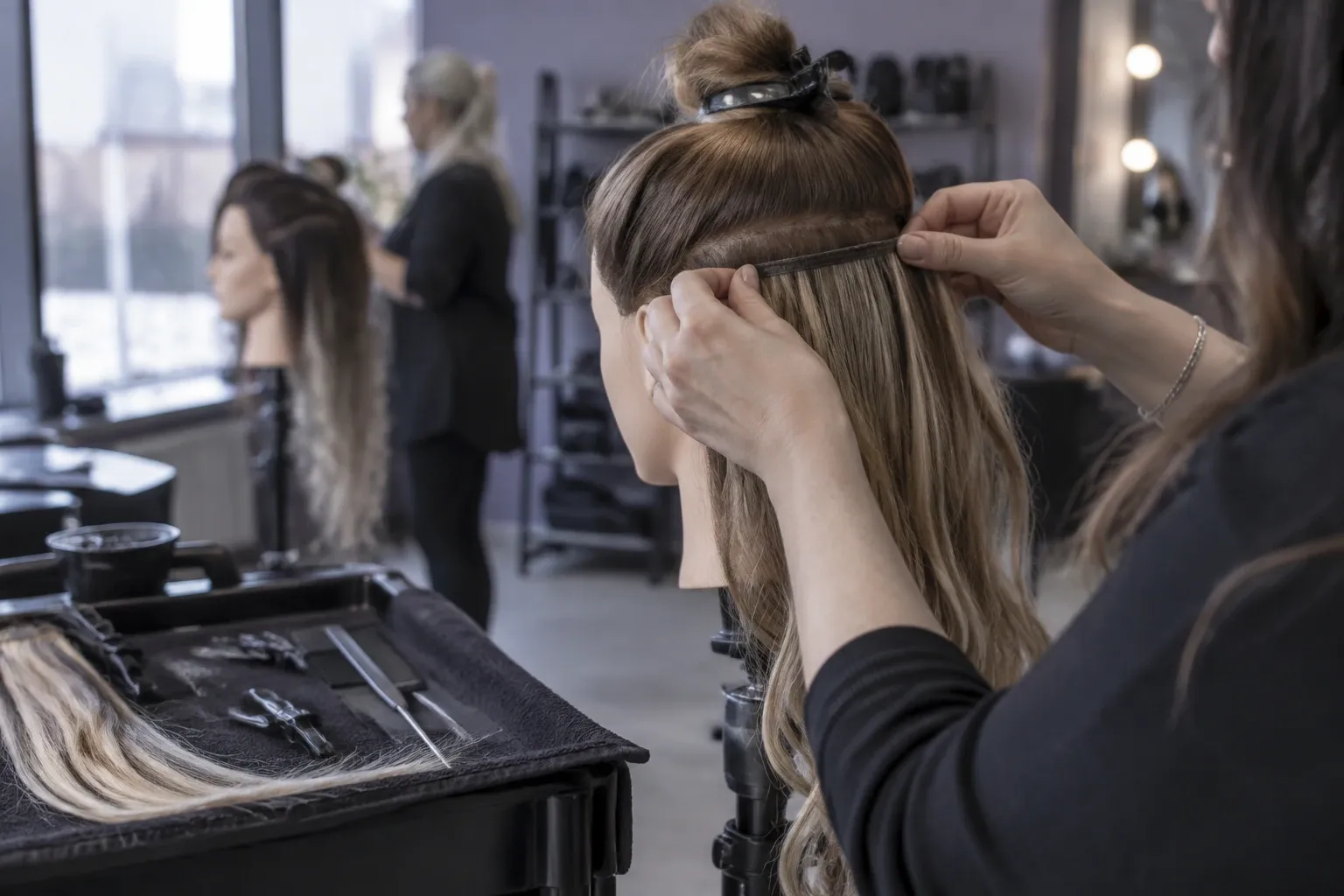
- Application and safe removal: Look for clear demonstrations plus supervised practice on live models for each method you’ll offer.
- Maintenance and aftercare: The course should cover refit intervals, hygienic handling, and how to spot early issues (slippage, matting, scalp irritation) and resolve them.
- Assessment: Prefer observed assessments with feedback over attendance‑only certificates.
- Evidence and verification: Regulated qualifications will have a qualification number you can verify on the register; private courses should provide a named certificate and a way for third parties (insurers, employers) to confirm it.
Insurance: what to ask before you book
Because legal regulation is light, insurers’ rules can make or break your ability to practise:
- Confirm in writing that your chosen course meets your insurer’s requirements for hair extensions, including the methods you’ll offer. Some policies require a broader hairdressing qualification as well as method‑specific training, and refuse online‑only certificates. Professional Beauty Direct policy wording.
- If you plan to change insurer later, ask the course provider for a list of insurers who accept their training, then still check yourself with any new insurer.
Putting your choice into practice: a simple checklist
- Shortlist 2–3 providers that teach the exact methods you want.
- For each, note the qualification title and, if it’s regulated, its code; then search the Ofqual Register.
- Email your insurer the course title, provider and methods; ask for written confirmation of cover.
- Ask the provider about live‑model practice, trainer‑to‑student ratio, assessment, and what happens if you need extra practice.
- Book only when content, assessment and insurance are all confirmed.
If you’re studying alongside work or caring, you may prefer modular study; our overview of part‑time hairdressing courses for adults explains typical formats.
How will you know your training was worth it?
- You can verify and evidence it: regulated qualifications appear on the national register, and reputable awarding bodies publish qualification titles you can cross‑reference. Ofqual Register; VTCT qualifications list.
- Your insurer has confirmed cover for the methods you offer. Keep their confirmation with your certificate. Professional Beauty Direct policy wording.
- You can deliver safe, comfortable fits and removals on varied hair types, and you know how to handle maintenance issues.
Quick reminders about the UK context
- No statutory licence: the job title and practice are not legally protected, though normal consumer law and local requirements still apply. House of Commons Library.
- Regulated versus unregulated courses: “Regulated” refers to the qualification, not the training business itself. You can confirm regulated qualifications on the national register. Ofqual Register.
If you’re still considering a broader route into hair first, see our overview of hairdressing courses to compare full qualifications with short skills courses.
Related reading